
The Hidden Cost of “Lost Contacts”: How Disconnected Tools Break Your Network

Key Takeaways:
- Contact fragmentation happens gradually as professionals adopt multiple tools without consolidating them.
- Scattered contact data leads to stale information, missed opportunities, and weakened relationships, not just administrative friction.
- The relational cost of fragmentation is often invisible until a specific deal, conversation, or opportunity goes wrong.
- Unified contact management means a single, current, authoritative record accessible across all your devices and platforms.
- Contacts+ syncs across Gmail, iCloud, Outlook, Exchange, and mobile to create a single source of truth for your network.
Picture this: you’re trying to reach someone you met at an industry event eight months ago. You have a vague memory of their name. You check your phone contacts; not there. You searched Gmail for a thread from last year, but the email address bounced when you tried to access it recently. LinkedIn shows them, but they’ve changed jobs, and the message request went unread. Your assistant has them in a spreadsheet somewhere, but it’s out of date.
You spend 20 minutes. You come up empty. The opportunity passes.
This is what fragmented contact management costs you. Not in a theoretical sense, but in specific, recurring moments where the network you’ve spent years building simply isn’t available to you when you need it.
The stakes are high. A missed connection isn’t just an inconvenience. It’s a deal that didn’t happen, a founder who closed their round with someone else, a relationship that went cold because the outreach never arrived.
How contacts get scattered in the first place
No one intentionally fragments their contact data. It happens gradually, as professionals adopt new tools and platforms without consolidating the old ones.
A typical power networker might have contacts living in:
- Gmail — every person who’s ever emailed them, stretching back years
- iCloud — contacts synced from their iPhone, often with different or incomplete information
- LinkedIn — connections that exist on the platform but aren’t exported or integrated anywhere
- Outlook or Exchange — work contacts are maintained separately from personal ones
- A CRM — clients and leads in a sales or deal-tracking tool that doesn’t sync with anything else
- Spreadsheets — manually maintained lists, often with information that diverges from other sources
- Business card apps — scanned cards sitting in a separate silo
Each platform has legitimate reasons to exist. The problem is that they don’t talk to each other, or when they do, the sync is partial, one-directional, or riddled with conflicts.
The result is a network that exists in many places but is accessible nowhere.
Why fragmented data weakens relationships
The operational cost of fragmentation is obvious: wasted time, duplicate effort, and outdated information. But the relational cost is more insidious.
You can’t be consistent if you don’t have complete information.
If your contact’s phone number is in one app and your notes from your last conversation are in another, and their current job title is somewhere else entirely, you can’t show up to a call or meeting with the full picture. You rely on memory, or you wing it, or you ask questions you should already know the answers to. Contacts notice when data is incomplete.
You can’t be proactive if your data is stale.
Relationship intelligence, like knowing when to reach out, who to connect with, and what matters to the people in your network, depends on current, accurate data. Fragmented systems decay faster because no single source of truth is being actively maintained. Things fall through the cracks not because you stopped caring, but because the cracks are everywhere.
You can’t scale your network if it’s a mess.
There’s a reason the most connected professionals in any industry seem to have an almost superhuman ability to maintain relationships at scale. It’s not that they’re more sociable; it’s that they’ve built systems that make consistency possible. Fragmentation is the opposite of a system. It’s the absence of one.
Real Scenarios Where Fragmentation Costs You
The deal that didn’t close.
A real estate investor is tracking a potential off-market seller. Contact notes live in a spreadsheet. The seller’s updated phone number is in Gmail. The relationship history is in the investor’s head. When the investor’s administrator tries to follow up, they’re working with partial information, and the outreach comes across as uninformed. The seller chose someone who seemed more attentive, which prevented you from closing the deal.
The founder who didn’t hear back.
A VC met a promising founder at a demo day. Business card scanned into one app. Follow-up email sent from a personal account. The thread is buried. Six months later, the founder closed a round with a competitor who stayed in touch. The VC finds out on TechCrunch.
The executive who walked into the wrong meeting.
An administrator maintains one contact list for the CEO’s personal relationships and another for professional ones. A lunch partner shifts from “business associate” to “friend,” and the notes about their recent health challenges, important context for a sensitive conversation, are in the professional system that the executive doesn’t check before lunch.
These aren’t edge cases. They’re the everyday tax of fragmented contact management, paid in missed deals, weakened relationships, and lost trust.
The Benefits of Unified Contact Management
A unified contact management system doesn’t mean abandoning your existing tools. It means connecting them so that your contact data flows to one authoritative source and stays current across all of them.
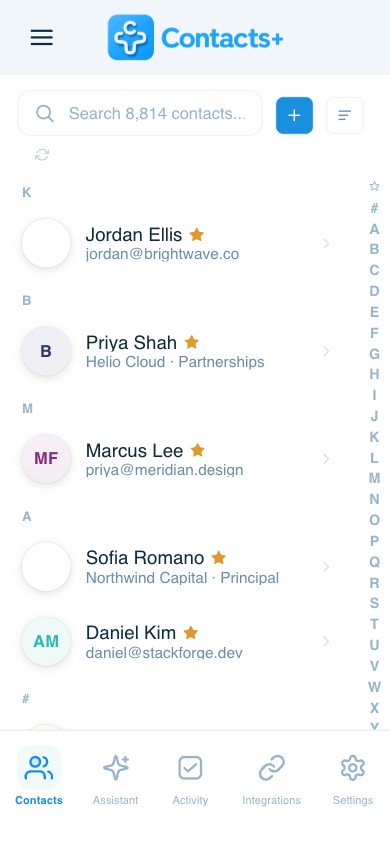
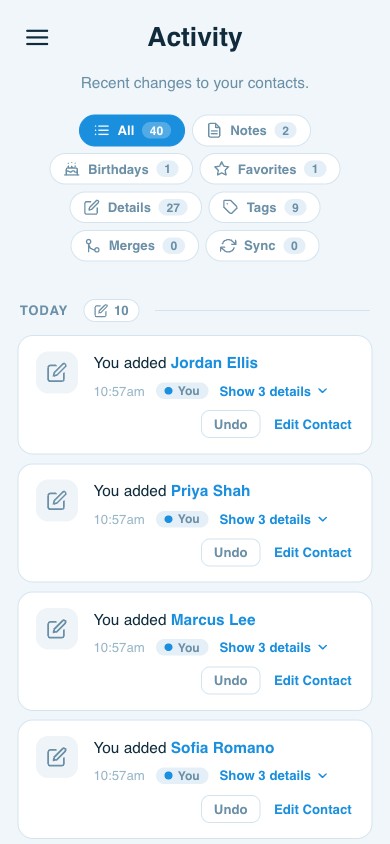
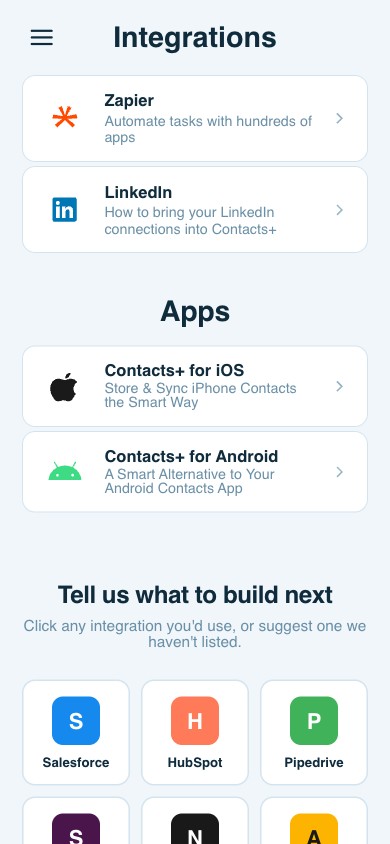
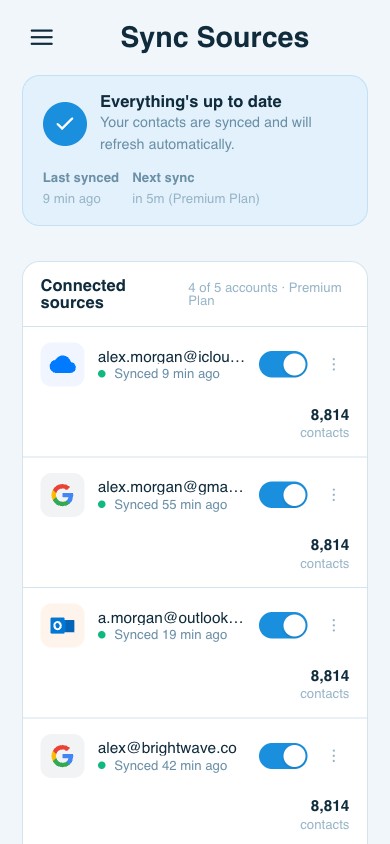
Contacts+ is built precisely for this. It syncs contacts across Gmail, iCloud, Outlook, Exchange/Office 365, and your mobile devices, creating a unified address book that reflects the most current information from every source. Changes made in one place propagate to the others. Duplicates are automatically detected and merged. AI enrichment fills in gaps and catches changes you’d otherwise miss.
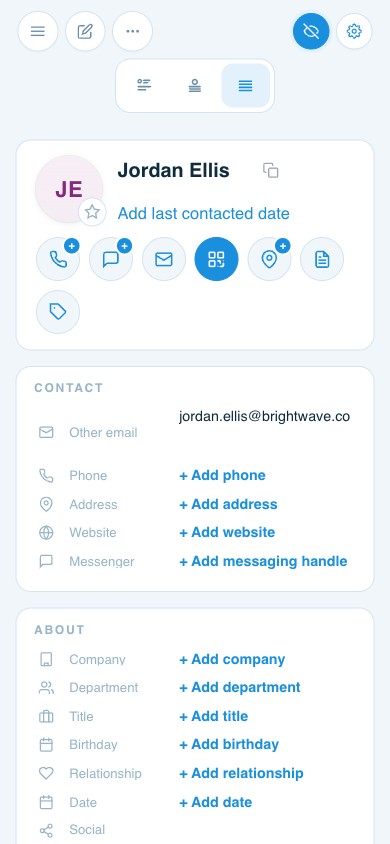
The result isn’t just a cleaner database. It’s a usable one. When you search for a contact, you find them. One record, with their current job title, their correct phone number, your most recent notes, and the context you need to reach out with relevance.
For real estate investors, that means your deal relationships and personal network live in the same searchable, up-to-date system. For venture capitalists, it means your founder pipeline, your LP relationships, and your co-investor network are all one unified asset. For administrators, it means the executive never walks into a meeting missing context that exists somewhere in a disconnected spreadsheet.
The Cost of Waiting
Every week you spend with fragmented contact data is a week your network is working against you. Duplicates multiply. Records decay. Opportunities pass.
The investment required to unify your contact data is finite. The return, in saved time, captured opportunities, and stronger relationships, compounds indefinitely.
If your contacts are scattered across apps you can barely keep track of, the cost isn’t just administrative. It’s relational. And in businesses where relationships are the primary asset, that’s a cost you can’t afford to keep paying.
Contacts+ syncs, enriches, deduplicates, and organizes, so your network is available to you when it matters, not just when you have time to hunt for it.
Frequently Asked Questions
Why does contact fragmentation happen even when I’m organized?
Most tools don’t sync with each other by default. You can be meticulous within each platform and still end up with conflicting, duplicated, or incomplete data across platforms. Fragmentation is a structural problem, not a personal failure.
What’s the first step to fixing a fragmented contact database?
Connect all your accounts to a unified platform like Contacts+. Once your sources are synced, you can run a duplicate sweep, let AI enrichment fill in gaps, and start working from a single source of truth.
Does Contacts+ replace my CRM?
Not necessarily. Contacts+ is designed to be the central hub for your contact data. It integrates with other tools (including via Zapier) rather than replacing them. It’s the layer that keeps everything current and connected.
How long does it take to unify a fragmented contact database?
With Contacts+, connecting your accounts takes minutes. The initial sync and deduplication process may take a bit longer depending on your database size, but most users have a unified, clean database within an hour.
What happens if the same contact has different information in different systems?
Contacts+ identifies conflicts and helps you resolve them, letting you choose which information is authoritative. Over time, AI enrichment keeps records up to date, reducing conflicts.
Related articles


The Follow-Up Formula: How Top Real Estate Investors Keep Deals Alive
Inbox to CMS: The Hidden Value in Your Email Contacts
Put your contacts to work
Sync, enrich, and clean your entire address book with ContactsPlus — free to start.
Sign up free ← Back to all articles