
Your Contact List Is Lying to You: How AI Fixes Outdated, Incomplete Relationships

Your contact list looks fine at first glance.
Names? Check.
Email addresses? Check.
A few tags, maybe a company name or two? Also check.
But here’s the uncomfortable truth: your contact list is probably lying to you. Not maliciously. Not on purpose. But quietly, in all the ways that matter.
Behind those neat rows of data are outdated roles, stale relationships, missing context, and signals so weak they may as well not exist. And if you’re a busy marketer trying to send relevant, well-timed emails, that quiet dishonesty can cost you engagement, deliverability, and trust.
The good news? AI is getting very good at calling those bluffs and fixing them without creating more work for you.
Let’s break down how contact lists drift out of reality, why it’s so hard to keep them clean manually, and how AI helps keep your network usable in the background.
The Slow Decay of “Good” Contact Data
Most contact lists don’t fall apart overnight. They erode slowly.
A contact changes jobs. Another stops engaging. Someone signs up with a personal email instead of a work one. A once-strong relationship quietly goes cold.
None of this triggers alarms. There’s no big red warning that says, “This data is no longer accurate.” So the list grows and decays at the same time.
Over months or years, you end up with:
- Contacts who technically exist but no longer matter
- Active customers mixed with long-gone prospects
- People are tagged by who they were, not who they are now
- Records missing key context about how, or if, they’re connected to you
On paper, your list looks healthy. In practice, it’s fuzzy at best.
Why Manual Cleanup Never Actually Happens
Most marketers know their contact data isn’t perfect. The problem isn’t awareness, it’s time.
Cleaning a list manually means:
- Reviewing engagement history, contact by contact
- Guessing whether silence means disinterest or bad timing
- Deciding when a relationship is “inactive enough” to matter
- Filling in missing fields, you don’t actually have answers to
That’s tedious work with no obvious finish line. And when deadlines are tight, list hygiene is always the first thing to get postponed.
So instead of fixing the problem, marketers work around it:
- Sending broader campaigns “just in case.”
- Over-segmenting with unreliable tags
- Keeping disengaged contacts because deleting feels risky
The list grows, trust in the data shrinks, and every send becomes a bit more of a gamble.
What AI Sees That Humans Miss
AI approaches contact data differently. It doesn’t rely on gut feelings or one-off snapshots. It quietly and continuously looks for patterns.
Instead of asking, “Should I clean this contact?” AI asks:
- Has this person’s behavior changed over time?
- Are engagement signals weakening, strengthening, or flatlining?
- Does this contact still behave like others in the same segment?
- Is key context missing that affects how this relationship should be treated?
Because AI evaluates trends, not moments, it can detect subtle shifts humans usually miss. That’s where the real value starts.
Detecting Stale Contacts Without Guesswork
A stale contact isn’t just someone who hasn’t opened an email recently. That could mean a dozen different things. AI looks deeper by combining signals like:
- Long-term engagement patterns (not just the last campaign)
- Consistency of opens, clicks, or replies over time
- Sudden drop-offs compared to similar contacts
- Signs of inbox decay, like repeated non-opens or soft bounces
Instead of labeling someone as “inactive” based on an arbitrary rule, AI flags contacts whose behavior no longer aligns with a healthy relationship.
The result? You’re not guessing who’s gone cold. Instead, you’re seeing it reflected in real data.
Filling in the Context Your List Is Missing
Most contact records are incomplete. That’s normal. What’s not normal is pretending incomplete data is complete. AI helps by identifying gaps that matter, such as:
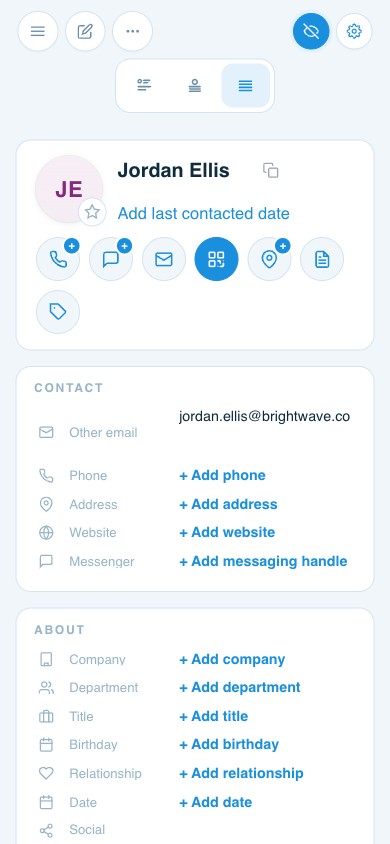
- Missing company or role information that affects relevance
- Contacts tagged broadly but behaving very differently
- Records that lack enough interaction data to justify inclusion in certain campaigns
Rather than forcing you to enrich every record manually, AI highlights where context is weak and adjusts how those contacts are treated.
That might mean:
- Excluding low-context contacts from high-stakes sends
- Grouping uncertain records separately until clearer signals emerge
- Preventing fragile data from skewing your segmentation
You still stay in control, but with far fewer blind spots.
Strengthening (or Downgrading) Relationships Automatically
Not every relationship stays the same forever. Some warm up. Some cool off. Most change gradually.
AI tracks these shifts by watching for weak or strengthening signals, including:
- Increased engagement after a long quiet period
- Sudden interest in specific topics or campaigns
- Consistent disengagement despite multiple attempts
- Behavior that no longer matches assigned tags or segments
Instead of freezing contacts in outdated categories, AI adapts alongside them. That means your “engaged” audience stays genuinely engaged, and your messaging stays relevant without constant manual adjustments.
Why This Matters More Than Ever
Inbox competition is brutal. Relevance isn’t optional anymore. When your contact list lies to you, the consequences show up fast:
- Lower open and click rates
- Higher unsubscribe risk
- Deliverability issues from disengaged sends
- Messages that feel off, even when the copy is good
AI doesn’t magically fix bad strategy. But it does remove the quiet data decay that undermines even your best campaigns. By keeping contact data honest, current, contextual, and responsive to real behavior, AI helps ensure your emails reach people who actually want to hear from you.
The Best Part: It Works in the Background
The real win isn’t that AI can clean contact data. It’s that it does it without demanding your attention.
No spreadsheets.
No monthly “cleanup days.”
No endless second-guessing.
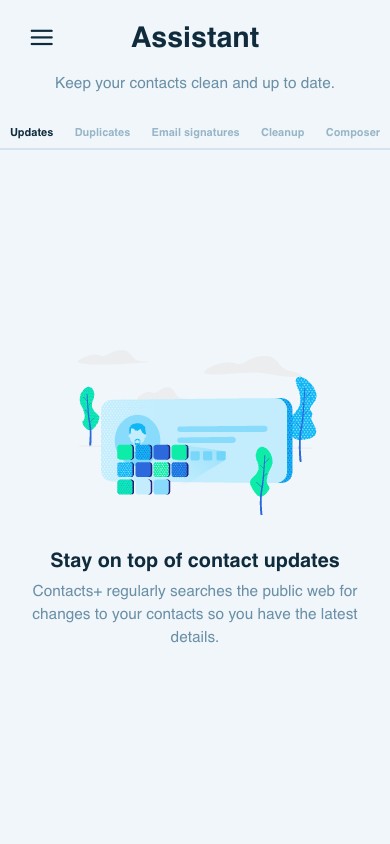
AI quietly monitors, adjusts, and surfaces what matters, so your contact list stays usable while you focus on creating great campaigns. Because the goal isn’t a perfect list, it’s a trustworthy one.
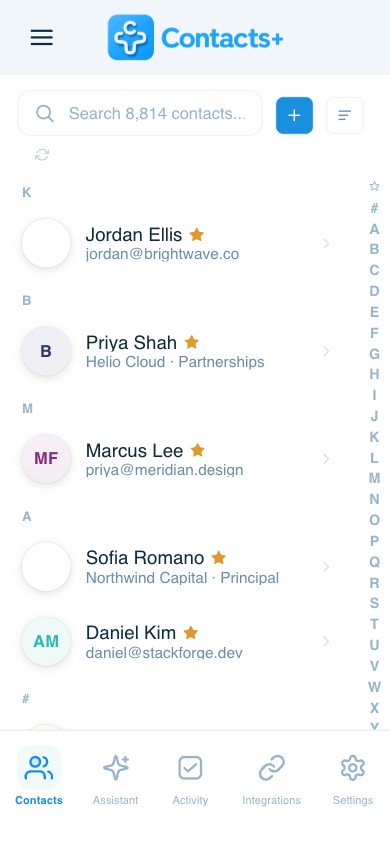
Use a tool like Contacts+ to help you automatically enrich contacts, update data, and harness the power of AI to keep your relationships fresh. Sign up for a free account today!
Related articles

AI‑Driven Contact Segmentation for Hyper‑Targeted Campaigns

The Intersection of Contact Management and Financial Planning for 2024

What To Do Before Hitting Send On Your Emails
Put your contacts to work
Sync, enrich, and clean your entire address book with ContactsPlus — free to start.
Sign up free ← Back to all articles