
Why Most “Networking” Fails After the First Follow-Up

Most networking doesn’t fail at the introduction. It fails quietly, weeks or months later, after a perfectly polite first follow-up… when nothing else happens.
You meet someone interesting at a conference, on a Zoom call, through a warm intro, or even over coffee. You exchange contact info. You send a “Great meeting you!” email. Maybe they reply. Maybe they don’t. Either way, life moves on. And so does the connection.
Not because there wasn’t potential, but because staying relevant over time is much harder than making first contact.
The Real Drop-Off in Networking
Most advice about networking focuses on the beginning:
- How to introduce yourself
- How to stand out
- How to write a good first follow-up
Very little advice focuses on what happens after that.
The truth is, the biggest drop-off in networking happens in the long middle. That’s the space between “nice to meet you” and an honest, ongoing relationship.
This is where connections fade for common, human reasons:
- You forget the details of how you met.
- You can’t remember what they were working on.
- You’re unsure when it’s appropriate to reach out again.
- You don’t want to sound awkward or salesy.
- Too much time passes, and reaching out feels uncomfortable.
Eventually, the contact becomes just another name in your inbox or phone. The opportunity quietly expires.
Networking Isn’t About Effort, It’s About Memory
The biggest myth about networking is that it’s about effort. In reality, it’s about memory.
Remembering:
- Why you connected
- What you talked about
- What you planned to follow up on
- What matters to the other person
Most people rely on their brains for this. And that works, until it doesn’t.
As your role gets busier and your contact list grows, your memory becomes less reliable. Not because you don’t care, but because you can’t realistically keep track of dozens or hundreds of relationships in your head.
This is where most networking systems break down.
Why “I’ll Remember” Doesn’t Scale
When relationships live only in your inbox, calendar, or memory, they’re fragile. You might remember the conversation today. You probably won’t six months from now.
Without context, every follow-up becomes harder:
- You reread old emails, trying to jog your memory.
- You hesitate because you don’t want to bother them.
- You delay reaching out until it feels too late.
The longer you wait, the more awkward it feels and the less likely you are to act at all. Networking doesn’t fail because people are lazy. It fails because there’s no external system supporting human memory.
Notes: The Missing Layer in Most Relationships
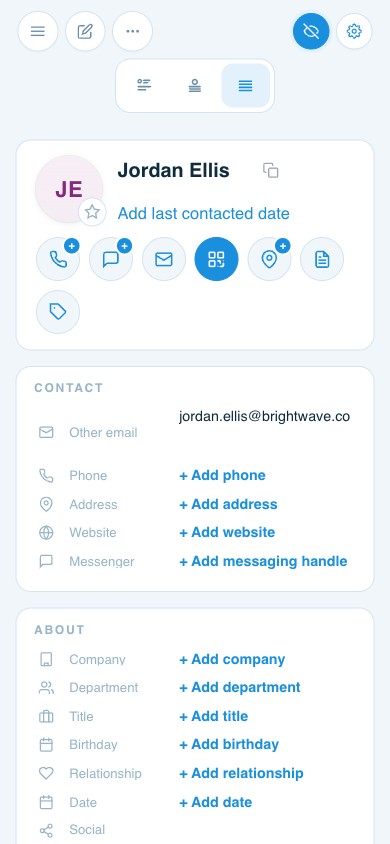
The simplest way to prevent connections from fading is also the most overlooked: notes. Not formal CRM fields. Not long summaries. Just quick, human context.
A few examples:
- “Met at product meetup and interested in partnerships.”
- “Exploring new role later this year.”
- “Has a weekly newsletter; prefers short check-ins.”
- “Follow up after their launch in June.”
These notes don’t replace conversation. They preserve it.
When notes are attached directly to a contact, you don’t have to remember everything, just enough to pick the relationship back up naturally.
Tags Help You Stay Oriented
Tags answer one simple question: Why do I know this person? Instead of relying on memory, tags give lightweight structure:
- Event: Conference 2025
- Role: Investor
- Topic: Hiring
- Status: Warm connection
You don’t need dozens of tags. In fact, fewer is better. Used thoughtfully, tags help you:
- Group contacts by context.
- Decide who to follow up with.
- Avoid reaching out blindly.
They turn a flat contact list into something meaningful.
Reminders Remove the Awkwardness
One of the hardest parts of networking is timing. You don’t want to follow up too soon. You don’t want to wait too long. And without a clear reason to reach out, you often don’t reach out at all.
Reminders solve this problem. Not rigid schedules, but contextual ones:
- “Check in after their conference.”
- “Reconnect in three months.”
- “Follow up after their job transition.”
When the reminder appears, the decision is already made. You’re no longer wondering if you should reach out, just what to say. This removes emotional friction and keeps relationships alive without constant mental effort.
Where AI Fits (And Where It Doesn’t)
AI can help with follow-ups, but only when it’s used correctly. The problem isn’t AI-generated messages. The problem is context-free messages.
A follow-up that says “Just checking in” feels empty, whether a human or AI wrote it. Where AI actually shines is when it works from real context:
- Notes from past conversations
- Tags that explain the relationship
- Timing cues from reminders
In that role, AI becomes a writing assistant, not a relationship substitute. It helps you:
- Draft messages faster
- Maintain a consistent tone.
- Reduce the friction of getting started.
But the meaning still comes from you. AI doesn’t replace memory. It supports it.
Networking Is a Long Game, Not a Moment
The most successful networkers aren’t the most outgoing or the most visible. They’re the most consistent.
They don’t rely on chance or perfect timing. They build simple systems that help them remember people, follow up thoughtfully, and stay relevant over time. They treat relationships as living things, not one-time exchanges.
The Real Reason Networking Fails
Most networking fails not because people don’t care, but because there’s no structure supporting care.
Without notes, context fades. Without tags, contacts blur together. Without reminders, time slips by. Without help writing, follow-ups get delayed.
When all of that lives only in your head, relationships are easy to lose. When it lives outside your head, networking stops feeling awkward and starts feeling natural.
Because staying relevant isn’t about saying the perfect thing, it’s about remembering why the relationship mattered in the first place.
Related articles

7 Tips for Being an Instagram Networking Pro

How Founders Can Use Contact Management to Build a Personal Brand

Personal Branding: A Comprehensive Guide
Put your contacts to work
Sync, enrich, and clean your entire address book with ContactsPlus — free to start.
Sign up free ← Back to all articles