
The Hidden Power of a Well-Organized Contact List for Startup Growth

For startups, success often depends on more than just a great idea or an innovative product. It hinges on relationships — with investors who provide the capital, advisors who share guidance, customers who validate the vision, and partners who help scale. In the early stages, who you know and how well you can nurture those connections can be the difference between thriving and fading into obscurity.
Yet many founders underestimate the importance of keeping their contact list organized. They may have investor names scattered across spreadsheets, customer leads buried in email threads, or advisors’ phone numbers saved in random notes on their phones. Without structure, opportunities slip through the cracks, outreach loses its impact, and the startup risks stalling before it can truly take off.
A thoughtfully structured contact list is more than an address book. It’s a living, dynamic asset that can fuel fundraising, accelerate sales, and open doors to new opportunities. Here’s how founders can transform “just having contacts” into building a network that actively drives growth.
Why Organization Matters for Startup Growth
When you’re in the trenches of building a startup, it’s easy to assume that as long as you have the right contacts saved somewhere, you’re covered. But a scattered list creates hidden costs:
- Missed Opportunities: Forgetting to follow up with an investor or partner because their details were buried in an old email can mean losing crucial funding or support.
- Inefficient Outreach: Spending hours digging through spreadsheets to find the right person slows momentum at the very moment speed is most critical.
- Strained Relationships: Mixing up details — such as sending the wrong pitch deck or forgetting the context of your last conversation — can erode trust and credibility.
By contrast, an organized, digitized contact list creates clarity. You know exactly who’s in your network, how they fit into your goals, and when to engage with them. Instead of juggling dozens of disconnected lists, you can see the big picture of your relationships and take action at the right time.
The Shape a Founder’s Contact List Actually Takes
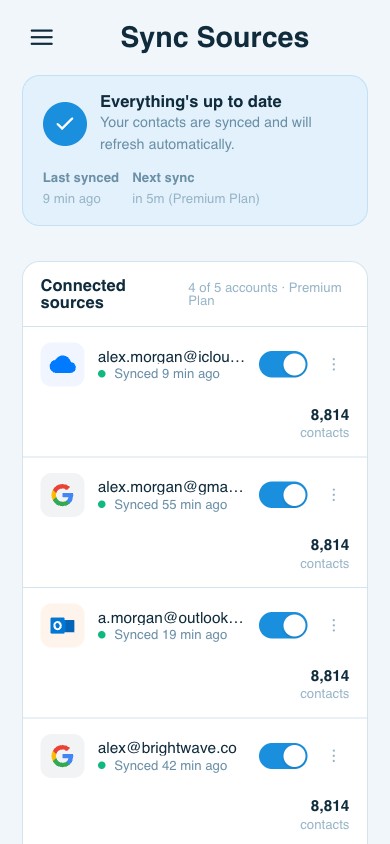
The mess is rarely a mystery once you look at where it came from. A founder is usually signed into four things at once: a personal Google account from before the company existed, a Workspace account created on day one, an iPhone syncing to iCloud, and an Outlook or Exchange account left over from a previous job. Every one of them quietly saves contacts. Gmail saves anyone you reply to. The phone saves anyone you call. A badge scan at demo day becomes a CSV that somebody imports “just to have it.”
So the problem isn’t one messy list — it’s four partial ones. The same investor ends up existing three times: once with only an email address, once with a title and company but no phone number, once with the phone number and nothing else. None of the three copies is wrong, and that is exactly what makes it hard to notice. The note about who introduced you sits on one copy while you email a different one, so the context is technically saved and practically lost.
Fixing it is two mechanical steps rather than a change of habit. First, connect the accounts so they feed a single list instead of four — two-way contact sync keeps that true continuously, so a number saved on your phone between meetings is on your laptop by the time you sit down. Second, merge the duplicates those accounts generate, deciding field by field which detail wins, so three partial investors collapse into one complete record that notes and follow-ups can attach to. Everything below — segmenting investors, logging interactions, spotting gaps — depends on those two steps being done first.
Fueling Fundraising with Smarter Contacts
Fundraising is one of the most relationship-driven parts of a founder’s journey. A startup rarely secures capital from a cold pitch alone — investors often back people they know, trust, or who are vouched for by someone in their network.
An organized contact list helps founders:
- Map Investor Networks: Categorize investors by stage (seed, Series A, growth), industry focus, or geographic region to ensure the right pitch reaches the right people.
- Track Warm Introductions: Record who introduced you to whom, so you can follow up with gratitude and build stronger relational bridges.
- Log Interactions: Keep notes on when you last spoke, what materials you shared, and what feedback you received. This ensures that each touchpoint builds on the last, rather than starting from scratch.
Instead of being reactive — scrambling for names only when capital is needed — a well-managed list enables proactive relationship building. That preparation can shave months off the fundraising process.
Accelerating Sales Through Organized Outreach
Sales is another area where organization pays dividends. Startups live and die by their ability to find and retain early customers, but those first buyers don’t always come through traditional marketing. Often, they’re found in the founder’s personal and professional networks.
With a structured contact list, founders can:
- Segment Potential Customers: Distinguish between warm leads (former colleagues, existing connections) and cold prospects, tailoring outreach accordingly.
- Personalize Communication: Store details such as company size, industry, or recent conversations to make outreach more relevant and compelling.
- Track the Sales Cycle: Monitor where each contact is in the buyer’s journey, so no opportunity stalls due to forgotten follow-ups.
A disorganized list turns sales into a guessing game. An organized one transforms it into a repeatable, scalable process.
Opening Doors to Advisors and Partnerships
Advisors and strategic partners play a crucial role in a startup’s trajectory. The right advisor can steer you away from costly mistakes, while the right partner can unlock distribution channels or accelerate product development.
But these relationships don’t just appear — they’re cultivated. Keeping an organized contact list allows founders to:
- Identify Gaps in Their Network: For example, noticing you have many technical contacts but few connections in marketing may guide your outreach efforts.
- Maintain Warmth in Relationships: Record personal notes (e.g., “met at last year’s accelerator demo day” or “enjoys discussing SaaS pricing models”) to build authentic, lasting connections.
- Spot Opportunities for Collaboration: By categorizing partners by strengths and industries, founders can quickly find the right ally when a need arises.
Moving Beyond “Just Having Contacts”
The most prominent shift founders need to make is moving beyond treating contacts as static names on a list. That is the practical difference between an address book and a personal CRM: one stores how to reach someone, the other remembers who they are to you. A contact list should be dynamic — enriched, updated, and actively used to drive momentum. Here’s how:
- Centralize Your Contacts: Bring everything into one place — whether from spreadsheets, email, or social networks — so you’re not juggling multiple lists.
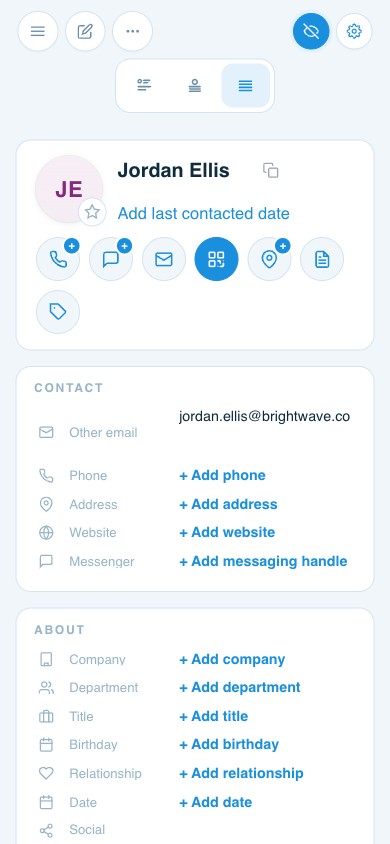
- Add Context: Don’t just store names and numbers—record notes on interactions, shared connections, and relevant details.
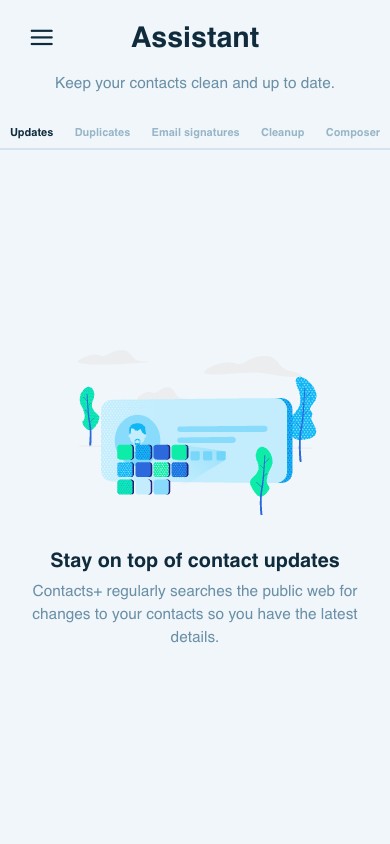
- Keep It Updated: People frequently change roles, companies, and industries. A stale contact list can be more harmful than no list at all.
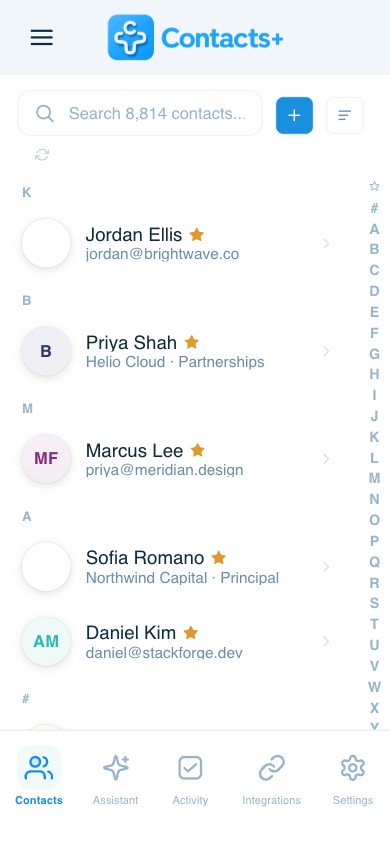
- Leverage Technology: Modern contact management apps, such as ContactsPlus, can sync data across devices, enrich profiles with public information, and remind you to follow up.
With these practices, your network becomes a strategic asset rather than a static archive.
The Startup Advantage of Organized Contacts
Ultimately, building a startup is a collective effort. Investors, advisors, customers, and partners all play crucial roles in determining whether your idea reaches its full potential. Founders who treat their contact list as a strategic growth engine, rather than an afterthought, gain a clear competitive advantage.
A well-organized contact list doesn’t just save time; it creates opportunities. It ensures you’re ready when the right investor shows interest, when a potential customer asks for a demo, or when a partner offers collaboration.
So, if your contact list is still a collection of spreadsheets and sticky notes, it’s time to rethink it. Because the hidden power of a well-organized contact list isn’t just about staying organized — it’s about accelerating growth, one relationship at a time.
Related articles

Why Relationship Intelligence Is the New Competitive Advantage

Automating Your Personal Outreach: AI‑Generated Touch‑Off Messages

Put your contacts to work
Sync, enrich, and clean your entire address book with ContactsPlus — free to start.
Sign up free ← Back to all articles