
AI Contact Clean-Up: Smart Suggestions for Merging, De-duplication, and Updates

Managing business contacts can feel like maintaining a garden — everything looks great at first, but over time, weeds grow, flowers overlap, and the layout gets messy. Similarly, contact databases naturally become cluttered as new information flows in: duplicates appear, phone numbers change, people switch jobs, and email addresses go stale. Without ongoing upkeep, what was once a tidy, valuable database quickly turns into a tangled mess.
However, AI-powered contact management tools can now do the heavy lifting of keeping your contact lists clean and organized — automatically. Rather than manually scanning through thousands of entries, you can rely on smart algorithms to suggest merges, flag outdated information, and streamline updates in real time. The result? You save hours of administrative work while ensuring your contact data is always accurate and actionable.
Why Contact Clean-Up Matters More Than Ever
Your contact list isn’t just a phone book — it’s an asset. Every decision-maker, investor, client, or lead you engage with depends on having the right information at your fingertips. But contact data decays quickly:
- People change roles frequently. LinkedIn estimates that job transitions happen every 2–4 years on average.
- Email addresses expire. Bounced emails waste time and can hurt your sender reputation.
- Duplicates creep in. Multiple team members adding the same contact can clutter databases and lead to confusion.
When your data is inaccurate, you risk missed opportunities, embarrassing miscommunications, and lost deals. The challenge lies in the tedious and error-prone nature of manual database maintenance, which is precisely where AI comes in.
How AI Helps Keep Contact Databases Clean
1. Smart Suggestions for Merging Duplicates
Traditional duplicate detection relies on exact matches, like spotting two entries with the same email address. AI takes this further by analyzing patterns and relationships to identify “fuzzy duplicates.” For example, an AI tool might notice that “Jon Smith, Acme Corp” and “Jonathan Smith, ACME Inc.” share a phone number and similar email domains — and suggest they’re likely the same person.
Instead of sifting through entries manually, AI can:
- Automatically group potential duplicates.
- Rank them by confidence level so you can approve merges in seconds.
- Update linked information across devices and platforms after merging.
This prevents embarrassing situations, such as sending the same sales pitch twice to one contact — or worse, mixing up job titles and notes between two similar profiles.
2. Flagging Stale or Inaccurate Information
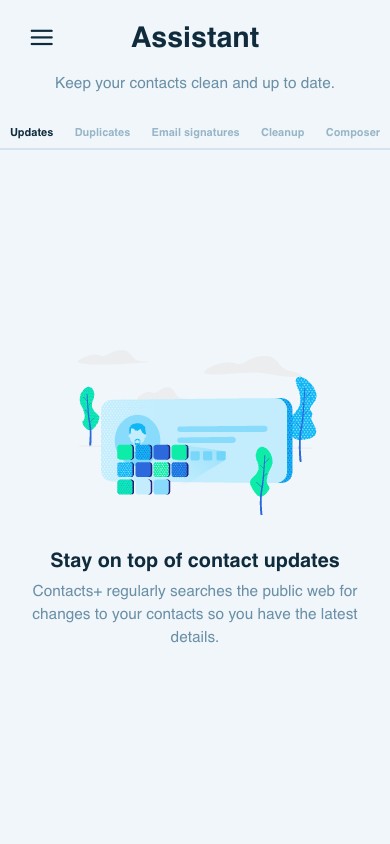
Contacts aren’t static. Job titles change, companies rebrand, and phone numbers go out of service. AI can scan public data sources, social profiles, and email behavior to detect when information might be outdated. For instance:
- If an email address starts bouncing, AI can mark it as invalid.
- If a LinkedIn profile indicates a new role, AI can prompt you to update the company name.
- If a phone number stops connecting, AI can flag it for review.
By surfacing these changes proactively, AI helps you avoid relying on bad data and keeps your outreach relevant and timely.
3. Real-Time Updates Across Platforms
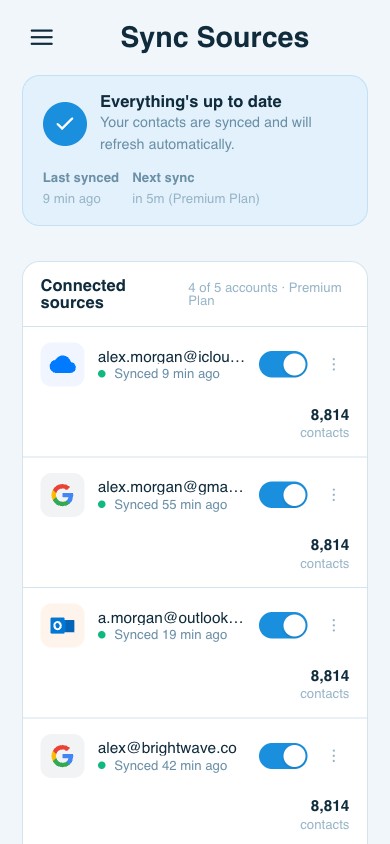
Many businesses juggle multiple systems — email clients, CRM tools, messaging apps — and keeping contacts synced can be a nightmare. AI can automatically push updates across platforms, ensuring consistency everywhere. If you approve a merge or update a phone number, that change can cascade through your entire workflow without manual effort.
4. Learning From Your Edits
The more you interact with AI suggestions, the smarter the system becomes. If you frequently approve certain types of merges or update contacts in specific ways, AI algorithms learn those patterns. Over time, they deliver even more accurate recommendations, reducing the need for oversight.
Practical Benefits for Your Team
AI contact clean-up isn’t just a nice-to-have feature; it creates tangible benefits for your entire organization:
- Saves time. No more combing through spreadsheets or manually checking contact info.
- Improves accuracy. Your team always works from a single source of truth.
- Boosts productivity. With fewer distractions from data clean-up, teams can focus on closing deals and building relationships.
- Protects your reputation. Accurate outreach reduces the risk of sending irrelevant or incorrect messages.
Getting Started With AI-Powered Contact Management
If you’re ready to stop wrestling with messy contact lists, here’s how to put AI to work:
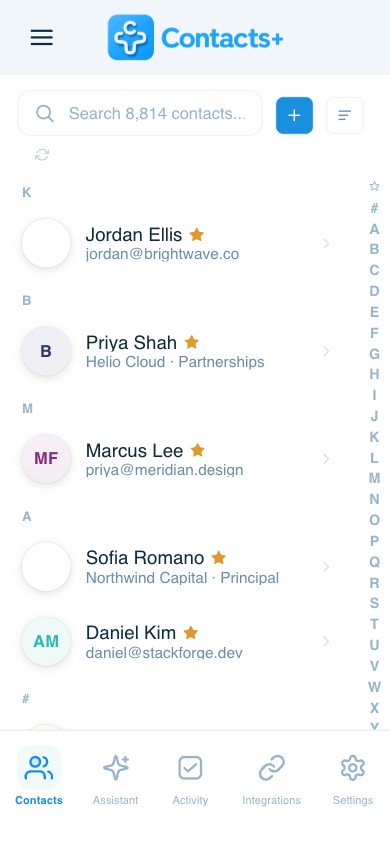
- Choose a tool that integrates with your workflow. Look for a contact management solution — like Contacts+ — that syncs seamlessly with email, calendars, CRMs, and mobile devices.
- Start with an audit. Let the AI scan your database to identify duplicates, outdated information, and missing fields.
- Review and approve suggestions. In the early stages, it’s wise to check AI recommendations to build trust in the system.
- Automate ongoing maintenance. Once you’re confident in the tool’s accuracy, set it to monitor your database continuously so clean-up happens in real time.
- Leverage insights. Use the clean, up-to-date data to segment your contacts better, personalize outreach, and strengthen business relationships.
The Future of Contact Clean-Up Is Effortless
The days of wrestling with spreadsheets and manually updating business cards are numbered. AI contact clean-up transforms what used to be a thankless chore into an automated, intelligent process. By suggesting merges, de-duplicating entries, and flagging stale info before it causes problems, AI ensures your contact database stays sharp, accurate, and ready to help you close the next big deal.
Whether you’re an entrepreneur growing your network, an investor managing deal flow, or an administrator keeping a team aligned, AI contact clean-up offers peace of mind — and a lot more free time.
Related articles

Streamlining Deal Flow: Contact Management Tips for Venture Capitalists

Why Venture Capitalists Need Effective Contact Management

7 Features of Contacts+ That Make Your Life Easier
Put your contacts to work
Sync, enrich, and clean your entire address book with ContactsPlus — free to start.
Sign up free ← Back to all articles