
Relationship Signals: 10 Moments When You Should Reach Out to a Contact

Key Takeaways:
- The best relationship outreach is triggered by events and signals, not a schedule.
- Job changes, funding announcements, and content publishing are among the highest-value signals to act on.
- Personal milestones and expressions of genuine support during hard moments create lasting goodwill.
- Contacts + AI enrichment automatically surfaces signals such as job changes.
- Combining signal awareness with good note-taking and tagging creates a proactive outreach system.
Most people reach out to their contacts when they need something.
The best networkers reach out when their contact needs something, or more precisely, when something has happened in that person’s life or career that makes a thoughtful message feel timely and relevant.
The difference isn’t just good manners. It’s the difference between being seen as someone who only shows up with a handout and someone who genuinely pays attention. Over time, that perception shapes whether people think of you when opportunities arise.
The challenge is spotting the signals. Not every moment is the right moment. But ten specific types of events consistently create the perfect opening to reach out, and for professionals whose success depends on their network, knowing how to recognize and act on them is a genuine competitive advantage.
Here are the ten moments and how to use them.
1. A Job Change
When someone in your network changes jobs, it’s one of the most powerful relationship triggers you can act on. They’re in a new chapter, often thinking about which relationships to bring with them, which problems to solve, and who might be useful in their new role.
A quick congratulatory note, specific to their new company or role, costs you nothing and earns enormous goodwill. It also opens a door: “I’d love to hear what you’re working on at [company].” Job changes are also functionally important: the old email address will no longer work, and building the new contact now prevents the relationship from going cold.
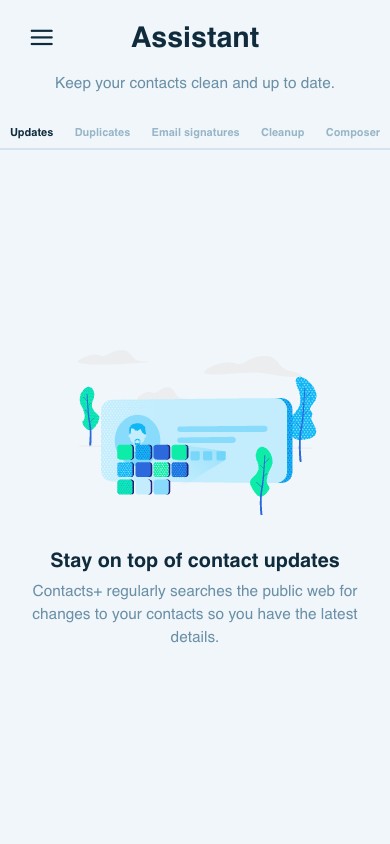
Contacts+ AI enrichment surfaces job and company changes automatically, so you can catch these moments without manually stalking LinkedIn.
2. A Funding Announcement
For venture capitalists and real estate investors, funding announcements are signal-rich events. A founder you’ve been tracking just raised a seed round; that’s a reason to send a congratulatory note, re-engage about their progress, or make a warm introduction to someone in your network who could be useful.
For administrators and operators, a funding announcement at a key client or partner company is worth noting: their priorities are shifting, their team is growing, and the relationship landscape is changing.
3. A New Product or Service Launch
When a contact launches something new, a product, a service, a fund, a property, they need two things: attention and support. Reaching out to acknowledge the launch, share it with your network, or offer specific feedback is a meaningful gesture that most people genuinely appreciate.
It also gives you a natural conversation starter: “I saw you launched [X], how’s the reception been?” You’re not pitching, you’re engaging.
4. A Shared Media Mention
If someone in your network is quoted in an article, featured in a podcast, or mentioned in industry coverage, they’ll almost certainly notice who acknowledges it. Most people don’t send those messages. The ones who do are remembered.
This is especially powerful for contacts you don’t talk to frequently. A note that says “I saw you in [publication], great perspective on [topic]” signals that you’re paying attention even during the quiet periods.
5. Industry Events and Conferences
Before an industry event, reach out to contacts who you know will be attending: “I’ll be at [conference] next week, would love to grab coffee or connect at the [session].” This turns a passive professional overlap into an active, scheduled connection.
After the event, follow up with anyone you spoke to while the conversation is still fresh. The half-life of a conference connection is short; a note within 48 hours is dramatically more effective than one sent two weeks later.
Contacts+ business card scanning makes this easy: scan cards at the event, add a quick note about where you met and what you discussed, and follow up before you’ve even left the venue.
6. Content Someone Publishes
When a contact publishes a newsletter, article, blog post, or LinkedIn piece, they’ve put something into the world and are hoping it resonates. If it’s relevant to your work or genuinely interesting, say so specifically.
Vague praise (“Great post!”) is forgettable. Specific engagement is not: “Your piece on cap rate compression in secondary markets, the point about institutional capital changing the calculus for smaller investors really stuck with me.” That’s a conversation, not a compliment.
7. A Personal Milestone
Birthdays, work anniversaries, promotions, and personal news (a new child, a house purchase, a marathon finish) are all reasons to reach out with warmth and no agenda. Contacts+ sends weekly birthday reminders so you’re never caught off guard.
These touchpoints are underused in professional relationships. Most people restrict “personal” outreach to close friends. But a brief, genuine acknowledgment of a personal milestone, especially from someone outside someone’s immediate circle, tends to land with unusual impact.
8. A Challenge or Public Setback
This one requires care, but it’s worth including. When a contact’s company goes through a tough stretch, a product failure, a layoff, a market downturn, a brief, supportive note (with zero agenda) is often the most memorable outreach you’ll ever send.
Don’t pitch, don’t problem-solve, don’t offer unsolicited advice. Just acknowledge the difficulty and express genuine support. People remember who showed up during hard chapters.
9. A Relevant Introduction Opportunity
One of the most valuable things you can do for your network is connect two people who should know each other. When you encounter someone who would genuinely benefit from meeting a contact, make the introduction promptly.
“I met [person] at [event] and immediately thought of you. I think you’d find each other’s work interesting” is a low-effort, high-value action. Double opt-in introductions (checking with both parties first) are the gold standard, but even a warm cc’d email signals generosity and attention.
10. When You’re Thinking About Them for No Reason
Sometimes the right signal is no signal at all, just a genuine thought. “I was reading about [topic] and immediately thought of you” or “I was reminded of that conversation we had at [event] about [thing]” is entirely valid outreach.
The best networks are maintained not just by triggers and events, but by a culture of low-friction, low-agenda contact. A quick message that says “thinking of you, hope the [project/deal/season] is going well” costs nothing and keeps a relationship warm between bigger touch points.
Making Signals Actionable
The challenge with signal-based outreach is catching the signals in the first place. Most professionals miss most of them because they’re not looking.
A few practices that help:
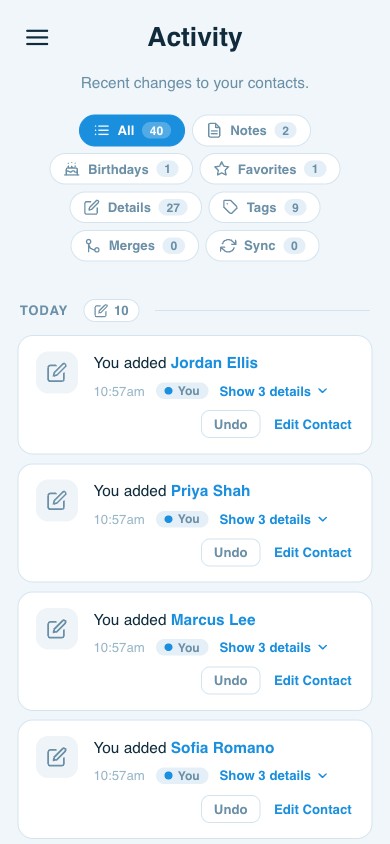
Enrich your contact data. Contacts+ automatically updates job titles and company information, so job changes surface in your feed rather than being discovered months late.
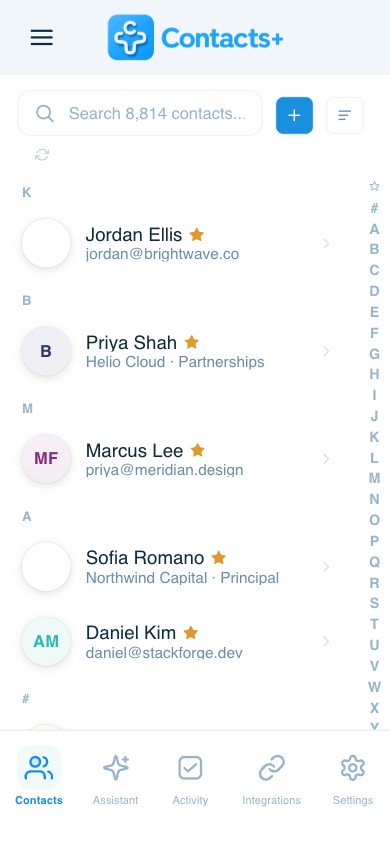
Use tags to prioritize. Not every contact needs to be monitored for every signal. Tag your top-tier relationships and focus your signal attention there.
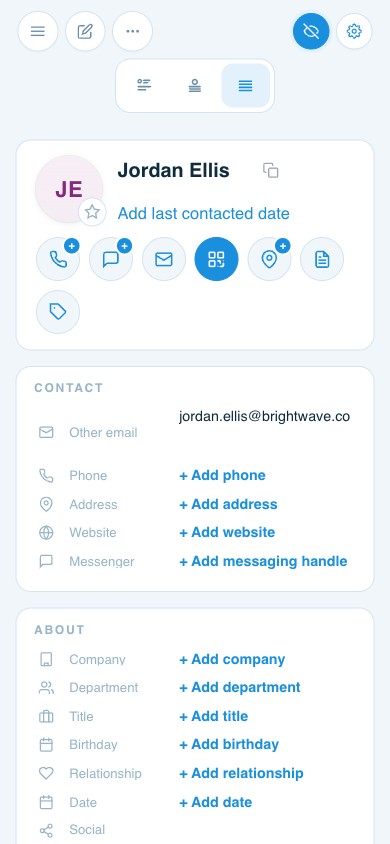
Capture notes immediately. When you interact with someone, log what you discussed. The context you capture today becomes the basis for relevant outreach six months from now.
Set follow-up reminders. After a meaningful conversation, set a reminder to check in in 30 or 60 days. You don’t need an excuse; the passage of time is enough.
Relationship outreach isn’t about engineering intimacy. It’s about paying attention and acting on what you notice. Do that consistently, and your network won’t just grow, it will deepen.
Frequently Asked Questions
How do I know when a contact changes jobs?
Contacts+ automatically scans publicly available data to update job titles and company information. Job changes surface in your enrichment feed so that you can act on them quickly.
What should I say when I reach out after a trigger event?
Keep it brief, specific, and agenda-free. Reference the specific event (“I saw you joined [company]”) and express genuine interest or congratulations. Don’t immediately pivot to what you need.
How many contacts should I actively monitor for signals?
Most professionals can realistically maintain active signal awareness for 50–150 contacts. Use tags in Contacts+ to identify your top-tier relationships and focus your attention there.
Is it weird to reach out based on a LinkedIn post or media mention?
Not at all, it’s flattering. The key is to be specific. Generic “great post!” messages are ignored; thoughtful engagement with the actual content is appreciated.
How do I avoid seeming like I’m always tracking people?
The key is genuineness. Reaching out because something genuinely reminded you of a contact is human and warm. The issue only arises when outreach feels calculated or is always followed by an ask.
Related articles
From ContactsPlusSet follow-up reminders on any contact, so nobody goes coldSee Follow-Up Reminders →


Put your contacts to work
Sync, enrich, and clean your entire address book with ContactsPlus — free to start.
Sign up free ← Back to all articles