
The “Second Brain” for Relationships: How to Build a Relationship Intelligence System

Key Takeaways:
- A relationship intelligence system goes beyond storing contact info; it captures context, history, and signals.
- Notes and tags are the foundation: log what you discussed, what you promised, and what matters about each person.
- AI-powered enrichment in Contacts+ keeps your data up to date without manual effort.
- Proactive reminders and triggers help you reach out at the right moment, not after the opportunity has passed.
- The value compounds: small, consistent habits build a network that works for you over time.
Your phone has hundreds, maybe thousands, of contacts. But how many of those people do you actually know? Not just their name and email, but what they’re working on, what they care about, when you last connected, and what you talked about?
For most professionals, the answer is: not many. That’s not a networking failure. It’s a systems failure.
A contact list is a storage unit. A relationship intelligence system is a living, breathing record of your professional world, one that captures context, surfaces reminders, and helps you show up as someone who actually pays attention. For real estate investors managing deal pipelines, venture capitalists tracking founders across portfolios, and administrators keeping a CEO’s relationships organized, this distinction is the difference between a warm network and a cold Rolodex.
Here’s how to build one.
What Relationship Intelligence Actually Means
Relationship intelligence is the practice of systematically capturing and surfacing context about the people in your network, not just who they are, but what you know about them and what they need from you.
Think about the best networker you know. They remember that your company just closed a round. They follow up after your conference panel. They send a relevant article out of the blue because it reminded them of a conversation you had six months ago. They don’t have a better memory than you; they have a better system.
Relationship intelligence tools and practices bridge the gap between the people you know and the people you can meaningfully engage. They transform your contacts from a static list into a dynamic asset.
Why Contacts Alone Aren’t Enough
Standard contact apps, even smart ones, are fundamentally designed around identity data: name, phone, email, company, title. That’s necessary, but it’s not sufficient for relationship management.
What goes missing without a dedicated system:
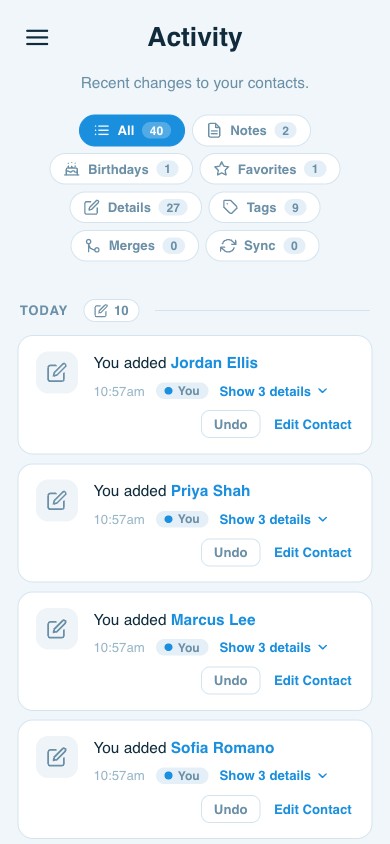
- Interaction history. You had a great call with a potential LP three months ago. But without a note, you’ll never remember what you promised to follow up on.
- Contextual tags. “Met at PropTech Summit,” or “introduced by Sarah Chen,” or “interested in multifamily, not single-family,” this is the texture that makes outreach relevant.
- Relationship stage. Is this person a warm contact, a cold connection, or an active collaborator? Without signaling, everyone ends up in the same pile.
- Time-based triggers. The best time to reach out is often tied to an event, like a job change, a deal announcement, or a birthday. Without reminders, those windows close.
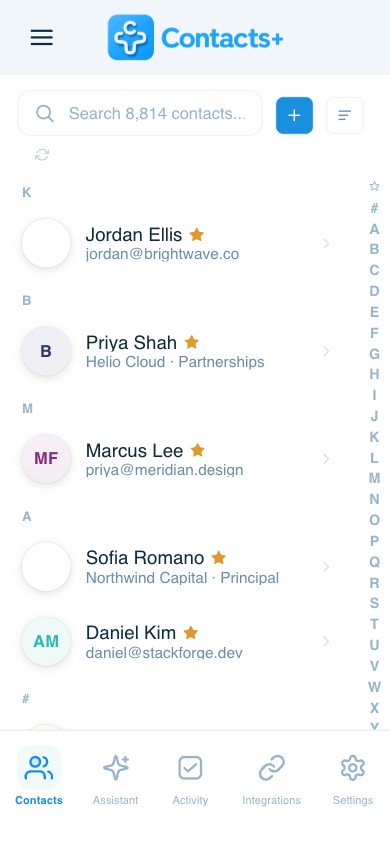
A great contact management platform provides the infrastructure to layer all of this onto identity data. Contacts+ is built precisely for this: notes, tags, interaction history, and AI-powered insights that help you act on your network, not just archive it.
Capturing Context: Notes, Tags, and Interaction History
The first step in building a relationship intelligence system is to create a consistent habit of capturing context at the point of contact.
After every meaningful interaction, ask yourself three questions:
- What did we talk about that matters?
- What did I promise or imply I would do?
- What do I want to remember about this person?
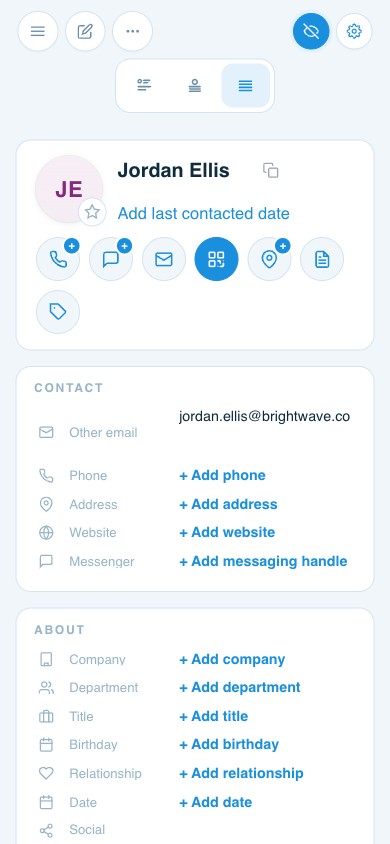
Then log it. In Contacts+, you can add notes directly to a contact, not just a generic memo field, but rich contextual notes that stay attached to the person and are searchable later. Tag contacts by relationship type, deal stage, interest area, or anything else that matters to your workflow.
For real estate investors, this might look like tagging contacts as “potential buyer,” “lender,” “off-market referral source,” or “geographic market.” For venture capitalists, you might tag founders by sector, stage, and portfolio relationship. Administrators might use tags to denote a contact’s relationship to the executive, “board member,” “key client,” “media,” or “personal.”
The goal is to make your contact data searchable not just by name, but by context.
Using AI to Surface Reminders and Insights
Even the best manual system has limits. You can’t be expected to review every contact note every morning to find the right person to reach out to. That’s where AI earns its keep.
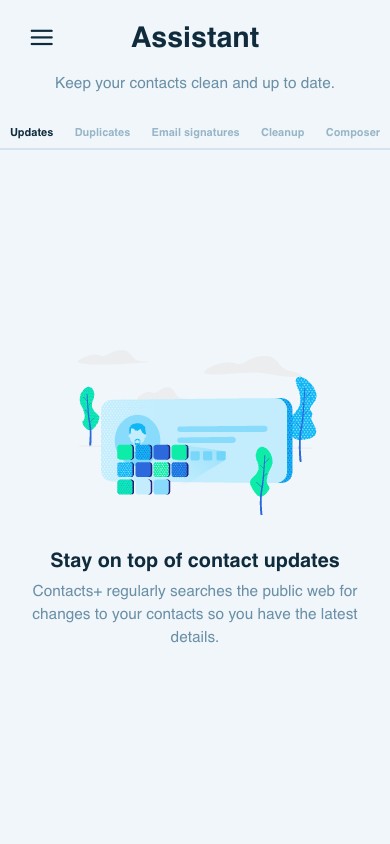
Contacts+ uses AI to keep your contact data up to date, automatically updating job titles, companies, and social profiles as people move around. This passive enrichment means your database stays accurate even when you’re not actively maintaining it.
But the deeper power is in surfacing signals. When a contact’s job title changes, that’s a trigger. When you haven’t connected with someone in 90 days who is marked as a priority relationship, that’s worth a nudge. When a birthday is coming up for a key investor or client, you want to know ahead of time, not on the morning of.
Building triggers and reminders into your contact system transforms it from reactive to proactive. You stop waiting for people to reach out and start showing up with relevance.
Example Workflows Using Contacts+
Real Estate Investor Workflow:
- After a showing or deal meeting, log a note immediately: property discussed, seller motivation, price expectations
- Tag the contact with the deal stage (e.g., “active,” “warm lead,” “past buyer”)
- Set a follow-up reminder for 30 days if no action is taken
- Use Contacts+ AI enrichment to catch job or company changes that might signal new buying power or urgency
Venture Capitalist Workflow:
- Tag founders by sector, stage, and source (e.g., “warm intro via partner,” “cold inbound”)
- Log notes after every founder call: traction metrics shared, concerns raised, next steps agreed
- Use the Contacts+ Composer to draft personalized follow-up messages that reference the specific conversation
- Set quarterly reminders to re-engage promising founders who weren’t ready when you first met
Administrator Workflow:
- Maintain a VIP tier of contacts for the executive, tagged by relationship priority.
- Log context from every meeting or event the executive attends, like who they met, what was discussed, and any action items.
- Use Contacts+ to sync across devices, ensuring the executive always has up-to-date contact data on their phone before a meeting.g
The Compounding Returns of Consistency
The value of a relationship intelligence system compounds over time. The note you log today becomes the context that makes your outreach remarkable six months from now. The tag you add after a conference becomes the filter that helps you find the right person to introduce a year later.
Most professionals treat their network like a drawer they throw business cards into. The ones who build real relationship capital treat it like a garden, something they tend, cultivate, and return to regularly.
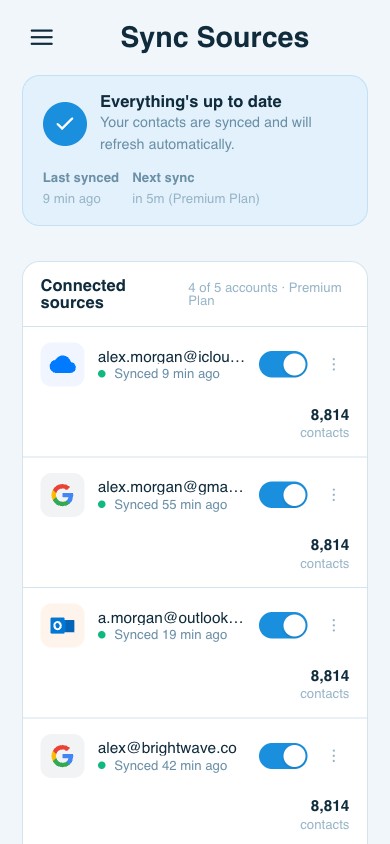
Contacts+ gives you the tools to do that without it becoming a second job. The infrastructure is there: notes, tags, AI enrichment, cross-platform sync, business card scanning, and intelligent reminders. What you bring is the habit of capturing context at the moment it matters.
Your second brain for relationships isn’t science fiction. It’s a system you can start building today.
Frequently Asked Questions
What is a relationship intelligence system?
A relationship intelligence system is a structured approach to managing your professional relationships, not just storing contact information, but capturing context, interaction history, and signals that help you engage your network meaningfully and at the right time.
How is this different from a CRM?
CRMs are typically designed for sales pipelines and team-level tracking. A relationship intelligence system is more personal; it’s built around individual relationships, context, and long-term network value, making it ideal for investors, executives, and professionals who manage relationships over years rather than just deal cycles.
Can I build a relationship intelligence system in Contacts+?
Yes. Contacts+ supports notes, tags, AI enrichment, business card scanning, cross-platform sync, and intelligent reminders, all of which are building blocks of a personal relationship intelligence system.
How often should I update my contact notes?
The most effective habit is to log notes immediately after meaningful interactions, such as calls, meetings, and events. Even two or three sentences of context are far more valuable than trying to reconstruct a conversation weeks later.
Do I need to be a power networker for this to be useful?
Not at all. Even if you have 200 important contacts rather than 2,000, having context and history on those relationships will make your outreach more relevant and your connections stronger.
Related articles

Relationship Signals: 10 Moments When You Should Reach Out to a Contact

The Follow-Up Formula: How Top Real Estate Investors Keep Deals Alive

Put your contacts to work
Sync, enrich, and clean your entire address book with ContactsPlus — free to start.
Sign up free ← Back to all articles