
Top 10 Tools & Tactics to Elevate Audience Engagement in 2026

Key Takeaways
- Data depth drives personalization. Contact enrichment transforms thin records into actionable audience intelligence, enabling targeting that goes far beyond name and email.
- List hygiene is a non-negotiable foundation. Deliverability problems don’t announce themselves; they compound quietly. Regular cleaning prevents them from starting.
- Segmentation is the highest-leverage tactical shift most teams can make. Moving from mass sends to targeted cohorts consistently improves both open and click-through rates.
- Analytics should generate decisions, not just dashboards. The right tools surface what to do next, not just what happened.
- AI accelerates production without sacrificing quality. When used intentionally for subject lines, tone calibration, and copy refinement.
- Engagement is a two-way street—interactive elements, value-first content, and frequency calibration signal to subscribers that their attention is respected.
- Quality compounds; volume doesn’t. The most effective email programs in 2026 are built on cleaner lists, sharper segmentation, and more relevant messaging, not higher send frequency.
Audience engagement in 2026 isn’t about sending more emails. It’s about sending smarter ones. Inbox competition shows no signs of abating. Algorithms are growing increasingly sophisticated. Subscribers have come to expect hyper-relevance. And attention spans? Shorter than ever.
The good news: marketers now have access to a more powerful arsenal of tools and tactics than at any point in the discipline’s history.
If your objective is to meaningfully boost email engagement, strengthen deliverability, and maintain a consistent presence in your audience’s inbox, these 10 tools and tactics deserve a prominent place in your 2026 strategy.
1. Contact Enrichment Tools: Know More, Assume Less
If your contact records consist of little more than a name and an email address, your personalization will always hit a ceiling.
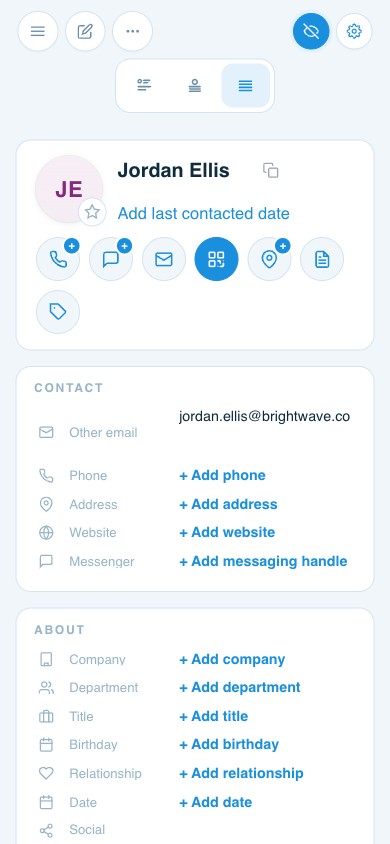
Contact enrichment tools systematically fill in the gaps, appending:
- Geographic location
- Company and firmographic data
- Professional role or industry vertical
- Behavioral and intent signals
The more contextual intelligence you have, the more precisely you can segment, and the more resonant your messaging becomes.
Why it boosts engagement: Relevance drives action. When subscribers feel like a message was written specifically for them, they click.
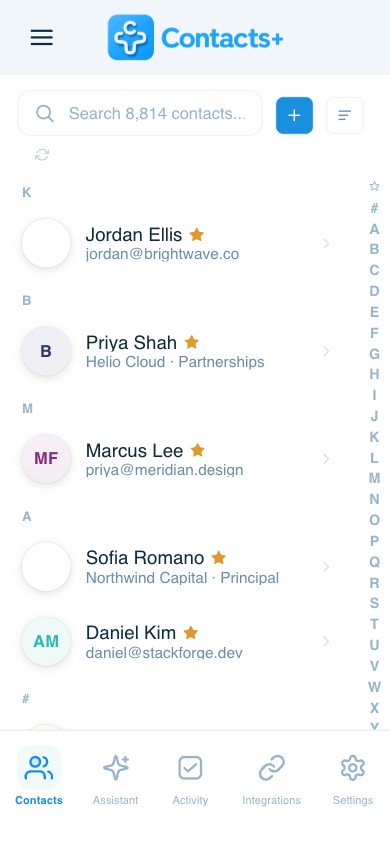
Quick win this week: Audit your current contact fields. Identify the single missing data point that would have the greatest impact on targeting precision, and evaluate enrichment tools such as Contacts+ that can provide it.
2. List Cleaning & Deduplication Tools: Protect Your Deliverability Before You Optimize It
Before you can meaningfully improve engagement, you need to protect the infrastructure that makes engagement possible.
List cleaning tools help you:
- Eliminate duplicate records that skew reporting and inflate send volume
- Identify and remove invalid or malformed email addresses
- Surface outdated contacts who are no longer reachable
- Reduce hard and soft bounce rates that damage sender reputation
A rigorously maintained contact database improves inbox placement, reporting fidelity, and your standing with ISPs.
Why it boosts engagement: Engagement cannot occur if your emails never reach the inbox. List hygiene is the prerequisite, not an afterthought.
Quick win this week: Run a deduplication pass and suppress contacts who have shown zero engagement activity over the past 12 or more months.
3. Smarter Segmentation Software: Retire the “Send to All” Mentality
Broad, untargeted mass sends are among the most reliable engagement killers in modern email marketing.
Sophisticated segmentation platforms allow you to construct nuanced subscriber cohorts based on:
- Declared or inferred interests
- Lifecycle stage and purchase history
- Engagement recency and frequency
- Behavioral triggers and browsing signals
The result: fewer emails sent, to more precisely defined audiences, with dramatically better outcomes.
Why it boosts engagement: Targeted campaigns consistently outperform broad sends on every meaningful metric, including open rate, click rate, and conversion rate.
Quick win this week: Build one new segment beyond your default “all subscribers” list. Start with something accessible, for example, contacts who engaged within the last 60 days, and observe the performance differential.
4. Email Analytics Tools That Tell You What to Do, Not Just What Happened
Not all analytics platforms are created equal, and in 2026, the gap between basic reporting and genuinely actionable intelligence has never been wider.
The most valuable email analytics tools move beyond vanity metrics to help you answer:
- Which content formats and topics generate the most downstream clicks?
- Which audience segments convert at the highest rates?
- At what point in the subscriber journey does engagement deteriorate?
Seek platforms that simplify interpretation and surface clear recommendations, not just data-dense dashboards that require significant analytical overhead to parse.
Why it boosts engagement: Clarity of insight leads to precision of adjustment. Precision adjustments, compounded over time, produce meaningful performance gains.
Quick win this week: Review the performance of your last three campaigns. Identify one consistent engagement pattern, positive or negative, and design a deliberate test around it in your next send.
5. AI-Powered Content Assistants: Accelerate Production Without Compromising Quality
AI-assisted email tools have matured considerably. The most capable platforms now support:
- Subject line generation and A/B variation testing
- Headline and preview text optimization
- Tonal calibration for different audience segments
- Copy expansion, compression, and structural refinement
Deployed strategically, AI reduces production cycles while elevating the clarity and precision of your messaging.
Why it boosts engagement: Reduced production overhead enables more consistent send cadences. Better subject lines directly lift open rates, which are the first and most critical engagement threshold.
Quick win this week: Test two AI-generated subject line variants against your standard approach. Measure the open rate differential and let the data inform your next iteration.
6. Interactive Email Elements: Transform Passive Readers into Active Participants
Static, text-and-image emails are increasingly insufficient in an environment where subscriber expectations have risen sharply.
Interactive elements, like polls, embedded surveys, dynamic content blocks, and behavioral triggers, invite subscribers to engage rather than simply consume.
Effective implementations include:
- Single-question polls embedded directly in the email body
- Feedback buttons and sentiment prompts
- Countdown timers tied to time-sensitive offers
- Dynamic product or content blocks that adapt to subscriber behavior
Why it boosts engagement: Interaction increases dwell time and click-through rates, while simultaneously generating first-party behavioral data you can act on in future campaigns.
Quick win this week: Add a single embedded poll question to your next newsletter. Monitor both completion rates and downstream click behavior.
7. Engagement-Based Frequency Calibration: Match Cadence to Appetite
One send cadence applied uniformly across your entire list is a blunt instrument. Different subscribers have meaningfully different tolerances, and ignoring that reality carries real performance consequences.
A more sophisticated approach adjusts frequency based on demonstrated engagement levels:
- Highly engaged: Maintain or modestly increase send frequency
- Moderately engaged: Sustain a steady, predictable cadence
- Disengaged or at-risk: Reduce frequency and initiate re-engagement protocols
Why it boosts engagement: Over-messaging disengaged subscribers suppresses overall performance metrics and accelerates list attrition. Frequency calibration protects both deliverability and subscriber goodwill.
Quick win this week: Define an “at-risk” segment, for example, contacts who haven’t engaged in 60 to 90 days, and reduce their send frequency for one full month. Observe whether reduced pressure improves re-engagement rates.
8. Consistent Value-First Newsletters: Build the Trust That Makes Engagement Sustainable
The most enduring email engagement strategy in 2026 is deceptively simple: be genuinely useful with your email newsletters.
Promotional-only email streams erode subscriber trust over time. The antidote is deliberate content diversification:
- Educational content that develops subscriber knowledge or skills
- Industry intelligence and curated trend analysis
- Concise, immediately actionable tactical tips
- Carefully selected third-party resources that reinforce your brand’s point of view
When subscribers consistently derive value from your emails, independent of whether they make a purchase, they stay subscribed, engaged, and receptive.
Why it boosts engagement: Value builds trust. Trust sustains long-term engagement far more effectively than promotional pressure ever can.
Quick win this week: Replace one promotional content block in your next campaign with an educational or editorial section. Measure whether the shift produces any change in click patterns.
9. Re-Engagement Campaign Frameworks: Recover What You Haven’t Lost Yet
Inactive subscribers are not a lost cause, but they will become one if left unaddressed.
A well-constructed re-engagement sequence applies structured, escalating prompts:
- Email 1: A direct, low-pressure check-in — “Still interested in hearing from us?”
- Email 2: A compelling incentive — exclusive content, a meaningful offer, or a personalized recommendation.
- Email 3: A clear, final prompt before list suppression — frame it as a courtesy, not an ultimatum.
If a subscriber fails to re-engage after all three touchpoints, remove them. Carrying dead weight on your list actively harms your sender reputation and distorts your performance data.
Why it boosts engagement: Removing chronically inactive subscribers improves average open rates and preserves the deliverability health of your entire program.
Quick win this week: Identify subscribers who have been inactive for six or more months and draft your first re-engagement message. Aim for a tone that feels human and low-stakes, not transactional.
10. Singular, Unambiguous CTAs: Stop Competing With Yourself
One of the most overlooked and highest-impact levers available to email marketers remains stubbornly underutilized: simplifying the call to action.
Too many competing buttons fragment subscriber attention and dilute click-through potential. A disciplined approach favors:
- One primary CTA per email
- Action-oriented, outcome-specific language (“Get the guide” vs. “Click here”)
- A visually dominant button that commands immediate attention
Why it boosts engagement: Reduced optionality sharpens focus. When subscribers know exactly what you want them to do, they’re more likely to do it.
Quick win this week: Strip your next campaign down to a single primary CTA. Compare click-through rates against your previous multi-CTA sends.
The Overarching 2026 Strategy: Depth Over Volume
If there is a single governing principle shaping high-performance email marketing in 2026, it is this: quality systematically outperforms quantity.
The most effective practitioners aren’t flooding inboxes; they’re engineering precision:
- More intelligently segmented sends
- Meticulously maintained contact lists
- More contextually relevant content
- Sharper, more intentional messaging
Audience engagement tools are instrumental. But the strategic framework that governs how you deploy them is what ultimately determines outcomes.
When you integrate clean contact management, sophisticated segmentation, clear analytics, and thoughtful personalization into a coherent system, you create something that doesn’t just perform, it compounds.
Where to Begin
If this list feels daunting, resist the urge to overhaul everything at once.
Select two tactics: one that elevates list quality, and one that sharpens targeting. Execute both this month. Measure rigorously. Iterate.
Audience engagement doesn’t transform overnight. It improves incrementally as your systems become more refined, your data more accurate, and your decision-making more informed.
In 2026, the marketers who win won’t be the ones sending the most. They’ll be the ones sending the most relevantly.
Frequently Asked Questions
What is audience engagement in email marketing, and why does it matter in 2026?
Audience engagement refers to the extent to which subscribers actively interact with your emails, such as opening, clicking, replying, or taking a desired action. In 2026, it matters more than ever because inbox algorithms increasingly use engagement signals to determine deliverability. Low engagement doesn’t just mean poor results; it can actively suppress your ability to reach even your most interested subscribers.
What’s the single most impactful change a marketer can make to improve email engagement quickly?
For most programs, the highest-leverage immediate action is list segmentation. Moving from a single “all subscribers” send to even two or three basic segments, based on engagement recency, interest, or lifecycle stage, typically produces measurable improvement in open and click rates within the first few campaigns.
How often should I clean my email list?
At a minimum, quarterly. High-volume senders benefit from monthly cleaning passes. Beyond scheduled hygiene, you should also run deduplication checks after any major list import, and implement automated suppression for hard bounces and unsubscribes in real time.
Are AI writing tools actually useful for email, or are they just a trend?
When used deliberately, AI tools provide genuine value, particularly for subject line testing, tonal adjustments, and accelerating first-draft production. The risk lies in over-reliance: AI-generated copy that isn’t reviewed and refined often reads as generic. Treat AI as a capable collaborator, not a replacement for editorial judgment.
How do I know if my email frequency is too high?
Watch for leading indicators: rising unsubscribe rates, declining open rates among previously engaged segments, and increased spam complaints. If disengaged contacts represent a growing share of your list, that’s often a frequency signal. Building an engagement-based cadence model, rather than a fixed weekly or bi-weekly schedule, is the most sustainable long-term approach.
What’s the difference between a re-engagement campaign and simply suppressing inactive subscribers?
A re-engagement campaign is an active, structured effort to win back dormant subscribers before they are removed. Suppression alone is passive. You stop sending without giving subscribers the option to opt back in. A well-executed re-engagement sequence respects the relationship and often recovers a meaningful percentage of contacts who had simply drifted, not definitively disengaged.
How many CTAs should an email contain?
For most campaign types, one primary CTA is the optimal approach. Secondary links (such as social follows or “read more” links) are acceptable as long as they don’t visually compete with the primary action. If you find yourself regularly including three or more CTAs, it’s worth reconsidering whether the email is trying to accomplish too many objectives at once.
Related articles
How a Weekly Email Can Help You Master Your Contacts

4 Best CRMs to Pair with Your Contacts+ CMS

Why Meaningful Contact Management Drives Better Email Results
Put your contacts to work
Sync, enrich, and clean your entire address book with ContactsPlus — free to start.
Sign up free ← Back to all articles