
Why Meaningful Contact Management Drives Better Email Results

Most marketers say they care about relationships. But when you look at how many teams manage their contact lists, it’s clear: we’re often managing data, not people.
Rows in spreadsheets. Email addresses in bulk uploads. Lists segmented by “opened last campaign.” Metrics dashboards full of percentages. And while data matters, email marketing performs best when it’s rooted in something deeper, like relevance, timing, and context.
That only happens when contact management shifts from storage to strategy. Let’s talk about the difference.
Contacts vs. Relationships: What’s the Real Difference?
At a surface level, contact management is simple:
- Store names
- Store emails
- Group them into lists
- Send campaigns
That’s contact storage. Relationship-driven contact management asks different questions:
- Who is this person in relation to our brand?
- What have they engaged with before?
- What do they likely care about next?
- How can we make our next message more relevant?
A contact is a data point. A relationship is ongoing context.
When marketers treat their database as a static list, email performance often plateaus. When they treat it as a living ecosystem of relationships, engagement improves. And that’s because relevance improves.
Why Organization Directly Impacts Email Performance
It’s easy to assume email results come down to:
- Subject lines
- Design
- Send time
But often, the real issue is list organization. If your contact database is messy, outdated, or poorly structured, it becomes harder to:
- Target the right audience
- Personalize messaging
- Analyze campaign performance clearly
- Maintain strong deliverability
Disorganized contacts lead to generic emails. Generic emails lead to lower engagement. Better organization creates better targeting. Better targeting creates better results.
It’s not just operational efficiency; it’s strategic clarity.
Relevance Is Built on Structure
You can’t personalize at scale without structured data. For example, if your list only stores name and email, your segmentation options are limited. But if your contacts are organized with tags, groupings, and contextual markers, you can send emails like:
- “Welcome back” campaigns to recent purchasers
- Re-engagement emails to inactive subscribers
- Content tailored to specific interests
- Promotions targeted by region or behavior
That’s where meaningful contact management becomes powerful. It enables thoughtful communication, not just mass distribution.
Smarter Segmentation: Moving Beyond “Opened Last Email”
Many teams default to the most basic segmentation rule:
“Opened last campaign.”
While that can be useful, it barely scratches the surface of what’s possible. Here are examples of smarter segmentation rooted in relationship thinking:
Interest-Based Segmentation
Instead of sending a single newsletter to everyone, segment contacts based on their expressed interests. For example:
- Product category preference
- Content topic engagement
- Event attendance
When subscribers consistently click on one type of content, that’s relationship insight, not just a metric.
Lifecycle-Based Segmentation
Segment based on where someone is in their journey:
- New subscriber
- First-time customer
- Repeat buyer
- Long-time inactive
Each stage deserves different messaging. A welcome series should feel different from a loyalty reward email. Without thoughtful organization, those distinctions blur.
Engagement Health Segmentation
Rather than waiting for unsubscribes, proactively identify:
- Highly engaged subscribers
- Moderately engaged contacts
- At-risk subscribers
This allows you to:
- Reward loyalty
- Adjust messaging frequency
- Re-engage before losing them
That’s relationship stewardship, not just campaign management.
Personalization That Feels Intentional
True personalization isn’t about inserting a first name in a subject line. It’s about sending the right message to the right person at the right moment.
That requires:
- Clean, accurate data
- Clear segmentation
- Confidence in your database
When contact data is messy, marketers often default to broad campaigns because they don’t trust their segmentation.
When contact data is organized and structured, marketers feel confident narrowing their audience, and performance improves because relevance beats reach.
The Hidden Risk of Treating Contacts Like Numbers
When contacts are treated as raw volume, teams often focus on growth at all costs:
- Bigger list
- More sends
- Higher frequency
But without relationship-driven management, this approach can backfire:
- Increased unsubscribes
- Lower open rates
- Deliverability challenges
- Brand fatigue
A clean, thoughtfully organized list often outperforms a larger but poorly managed one. Quality beats quantity in modern email marketing.
How Contacts+ Helps You Stay Thoughtful at Scale
Managing relationships manually isn’t realistic as your database grows. That’s where structure matters.
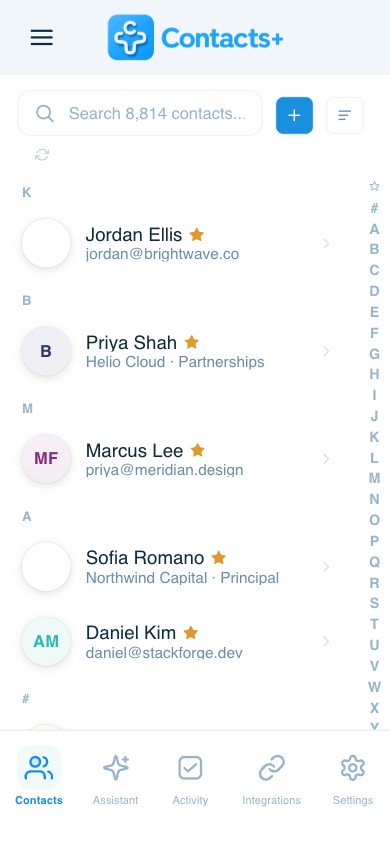
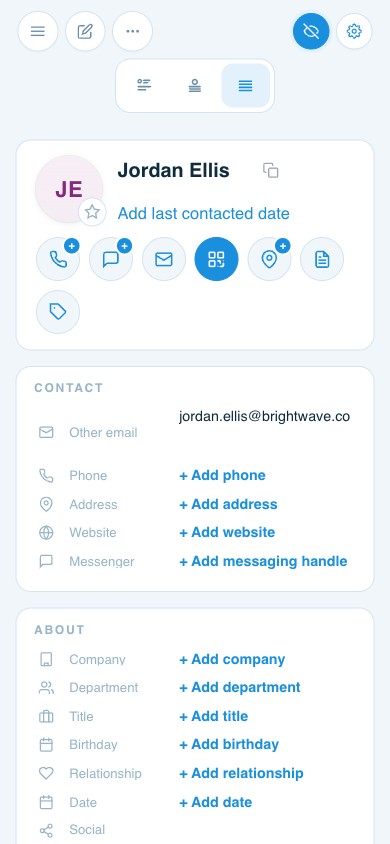
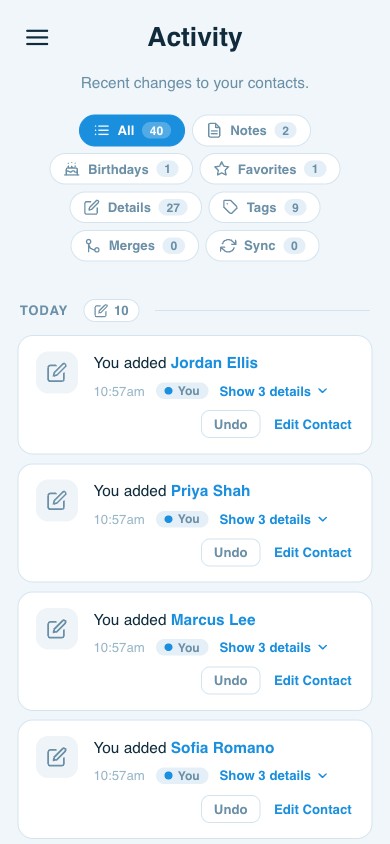
Contacts+ is built to help marketing teams move beyond basic storage and toward meaningful organization without adding unnecessary complexity. Here’s how it supports relationship-driven email strategy:
1. Clear Tagging and Grouping
Instead of constantly creating new lists for each campaign, Contacts+ lets you organize contacts using tags and logical groupings. This supports:
- Faster segmentation
- Less duplication
- More precise targeting
You’re not rebuilding audiences from scratch every time.
2. Cleaner, More Reliable Data
When contact records are clean and structured, marketers can trust their segments. That confidence leads to:
- More tailored campaigns
- Stronger engagement
- Better reporting insights
Because you can only personalize effectively when your data is organized.
3. Scalable Simplicity
One of the biggest barriers to relationship-driven marketing is tool complexity. If managing contacts feels overwhelming, teams default to “send to all.” Contacts+ keeps contact management simple enough to support growth without introducing feature overload.
The goal isn’t to add more dashboards. It’s to make better decisions easier.
4. Collaboration-Friendly Structure
Email marketing often involves multiple team members. When contact organization is consistent and transparent, collaboration improves:
- No confusion about which list to use
- No accidental overlaps
- No duplicate imports
Everyone works from the same structured foundation. And consistency strengthens strategy.
Thoughtful Marketing Wins Long-Term
The best-performing email programs don’t rely on tricks. They rely on trust. And trust is built when subscribers feel understood, not blasted. Meaningful contact management makes that possible. When you:
- Organize with intention
- Segment with clarity
- Personalize with context
You move from sending emails to nurturing relationships. And that shift, from data to people, is what drives sustainable engagement.
Your contact list isn’t just a database. It’s a collection of real people who chose to hear from you.
When you treat it that way, with structure, care, and strategic organization, your email results reflect it. Because better relationships create better results. And better organization makes better relationships possible.
Related articles
How a Weekly Email Can Help You Master Your Contacts
FullContact for iOS Gets New Merge Features in Version 4.1

Top 10 Tools & Tactics to Elevate Audience Engagement in 2026
Put your contacts to work
Sync, enrich, and clean your entire address book with ContactsPlus — free to start.
Sign up free ← Back to all articles