
Why Your CRM Is Failing You (and What a Contact Management App Can Do Better)

Customer Relationship Management (CRM) software has been the go-to tool for businesses looking to manage interactions with prospects and customers. But here’s the hard truth: most CRMs weren’t built with individuals, founders, or small businesses in mind. They were designed for enterprise sales teams chasing leads and closing deals — not for entrepreneurs juggling multiple roles, freelancers managing clients, or professionals nurturing a diverse web of personal and business relationships.
If you’ve ever signed up for a CRM only to abandon it a few weeks later, you’re not alone. Studies show that nearly 50% of CRM implementations fail to deliver expected results. The problem isn’t necessarily you — it’s the tool itself. Traditional CRMs are often overbuilt, overpriced, and underwhelming for the real needs of people who don’t fit neatly into the “sales pipeline” mold.
That’s where contact management apps come in. Instead of treating every relationship like a transaction, contact management apps are designed to put people first — helping you stay organized, connected, and ready to seize opportunities without the baggage of traditional CRMs.
Let’s break down why CRMs are failing so many people and how a contact management app can give you the agility and simplicity you actually need.
The Common Pain Points of CRMs
1. Too Complex for Everyday Use
Most CRMs are stuffed with features you’ll never use. Sales forecasting, pipeline analytics, opportunity scoring — these may work for large sales organizations, but they quickly overwhelm individuals or small teams. You log in to what feels like a cockpit of buttons, graphs, and reports, when all you really want is to remember who you talked to last week and when to follow up.
Complexity doesn’t just create frustration — it kills adoption. If using your CRM feels like work, you’ll avoid it. And once you stop updating it, the data becomes outdated, inaccurate, and practically useless.
2. High Costs Without Proportional Value
Traditional CRMs can be surprisingly expensive, often charging per user, per month. For small businesses, solopreneurs, or startups, these costs quickly eat into limited budgets — primarily when only a fraction of the features are actually used.
You may find yourself paying for advanced reporting dashboards, workflow automations, or integrations you’ll never touch. Essentially, you’re funding features built for someone else’s business model.
3. A Sales-First, People-Second Approach
CRMs are built around a pipeline mindset: leads move from stage to stage until they (hopefully) become customers. While that’s useful in sales-driven organizations, not every relationship fits into this linear process.
Think about investors, advisors, mentors, collaborators, friends, or professional peers. These aren’t “leads” you’re trying to close. They’re people whose relationships develop in dynamic, often non-linear ways. CRMs can’t easily adapt to this kind of relationship management, leaving you forcing connections into categories that don’t feel right.
4. Lack of Flexibility Across Contexts
Many professionals don’t just wear one hat. You might be an entrepreneur raising capital, a freelancer juggling clients, and a mentor guiding younger professionals — all at the same time. Traditional CRMs struggle to accommodate this diversity. They push you to track contacts in one rigid way, instead of flexing to your unique mix of professional and personal connections.
How a Contact Management App Does It Better
Contact management apps were designed to solve these exact problems. They take a simpler, more human-centered approach to organizing and nurturing relationships. Here’s how they outperform traditional CRMs:
1. Streamlined and Easy to Use
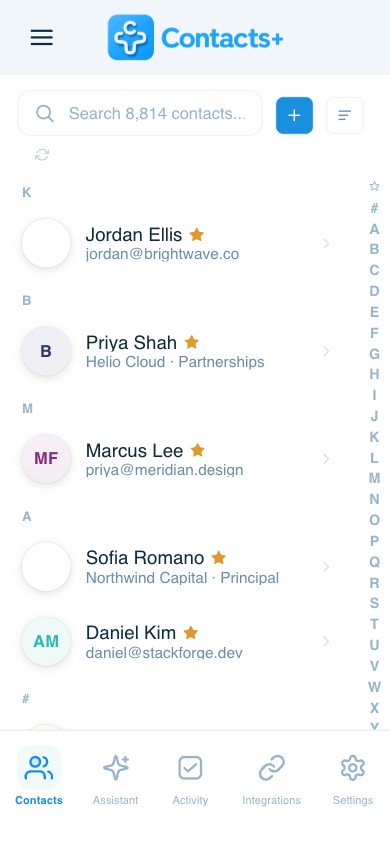
Contact management apps focus on essentials: storing contact details, tracking conversations, setting reminders, and syncing across devices. Instead of a bloated interface, you get a clean, intuitive system that you’ll actually want to use every day.
By reducing the friction of logging and updating information, these apps keep your data accurate and relevant. That means no more “forgotten” systems or abandoned CRMs.
2. Affordable for Individuals and Small Teams
Because they aren’t loaded with enterprise-only features, contact management apps are typically much more affordable. Many offer free tiers or low-cost plans that scale with your needs. This makes them accessible for solopreneurs, early-stage startups, and professionals who want to stay organized without blowing their budget.
3. Built for Relationships, Not Just Sales
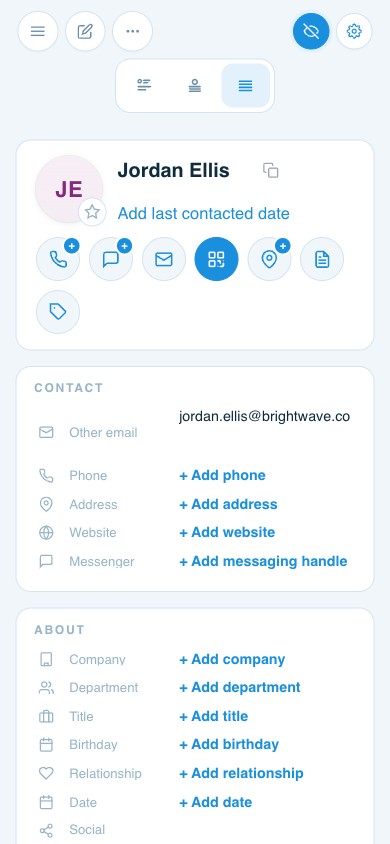
Unlike CRMs, which treat every contact as a potential “deal,” contact management apps let you store context. You can add notes about how you met someone, track your last conversation, or set reminders for birthdays and check-ins.
This people-first approach transforms your contact list into a living network — one that helps you build trust, nurture meaningful relationships, and uncover opportunities that extend far beyond a sales pipeline.
4. Flexibility Across Roles and Contexts
A good contact management app can handle the messy reality of modern professional life. Whether you’re managing investor relationships, coordinating with colleagues, or keeping track of personal connections, you can customize tags, fields, and categories to fit your needs.
Instead of forcing contacts into rigid pipelines, you build a system that mirrors your real-world relationships.
5. Enhanced Mobility and Integration
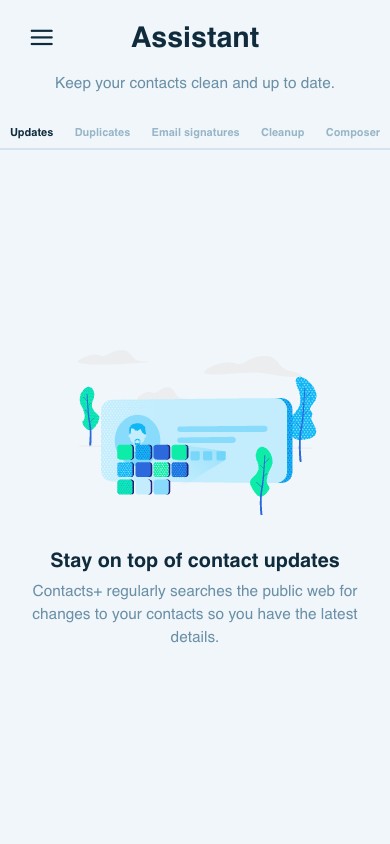
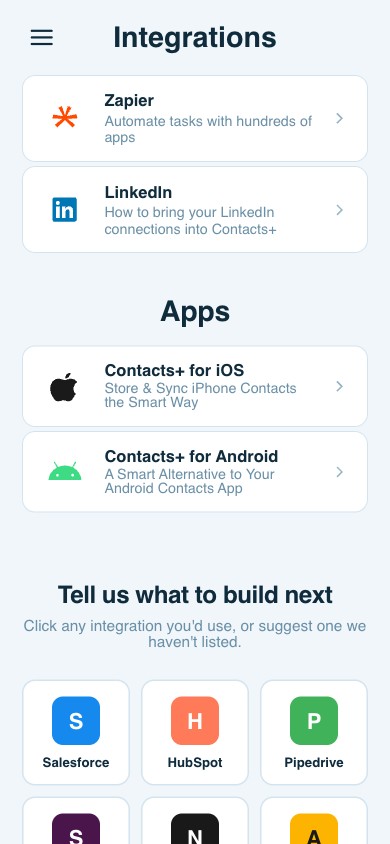
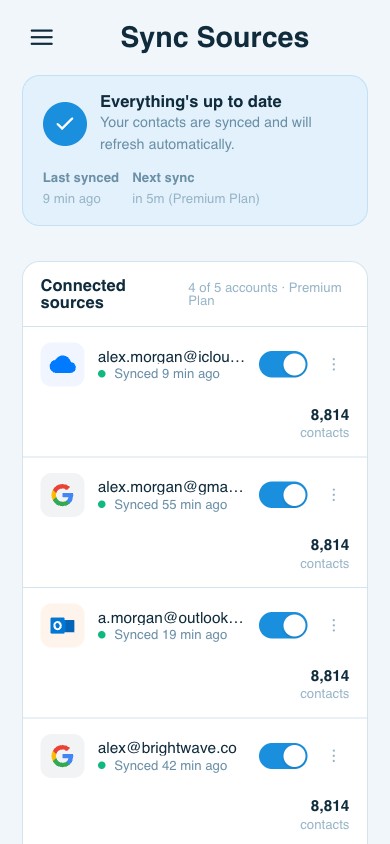
Many contact management apps are built for mobile-first usage. They sync seamlessly across your phone, desktop, and email accounts, ensuring your relationships travel with you wherever you go. Some even enrich your contact data automatically by pulling in details from LinkedIn, email signatures, or social media profiles.
This constant connectivity makes it easier to stay in touch, remember key details, and strengthen relationships — no matter where you are.
Making the Shift: From CRM to Contact Management
If your CRM feels like more of a burden than a benefit, it might be time to reframe how you think about managing relationships. Instead of asking, “How can I track leads through a pipeline?” ask, “How can I stay meaningfully connected to the people who matter most?”
A contact management app helps answer that question by providing a lightweight, flexible, and affordable solution tailored to today’s professionals. It’s not about abandoning structure altogether — it’s about using tools that support the way you naturally build and nurture connections.
CRMs will always have their place in large sales-driven organizations. But for individuals, startups, and small businesses, they often create more problems than they solve. Complexity, cost, and rigidity make them a poor fit for the dynamic, relationship-driven nature of modern work.
A contact management app, on the other hand, strips away the unnecessary noise and puts people back at the center. By focusing on simplicity, flexibility, and genuine connection, you can turn your network into an active driver of growth and opportunity.
In today’s world, where success often depends on who you know and how well you nurture those connections, that’s a competitive edge worth having.
Related articles

Why Relationship Intelligence Is the New Competitive Advantage

Automating Your Personal Outreach: AI‑Generated Touch‑Off Messages

Put your contacts to work
Sync, enrich, and clean your entire address book with ContactsPlus — free to start.
Sign up free ← Back to all articles