
How Administrators Can Improve Team Collaboration Through Contact Management

Administrators are usually the first to notice when team collaboration starts to slip: two people email the same client in the same week, or nobody can find the number for the vendor who installed the phone system. One overlooked fix is contact management — not for customers, but pointed inward at the organization itself.
Contact management is most often useful with potential clients and customers. However, in this article, we’ll explore how administrators can use contact management to improve team collaboration, streamline workflows, and create a more connected workplace.
The Importance of Team Collaboration in Organizations
For any organization, team collaboration is at the core. It allows employees to share knowledge, ideas, and resources, which can lead to more innovative solutions and quicker problem-solving. When teams collaborate effectively, they can work more productively, make better decisions, and achieve common goals.
However, fostering collaboration can be challenging, especially in larger organizations where team members may be spread across different departments, locations, or even time zones. This is where contact management comes into play.
1. Centralize Contact Information for Easy Access
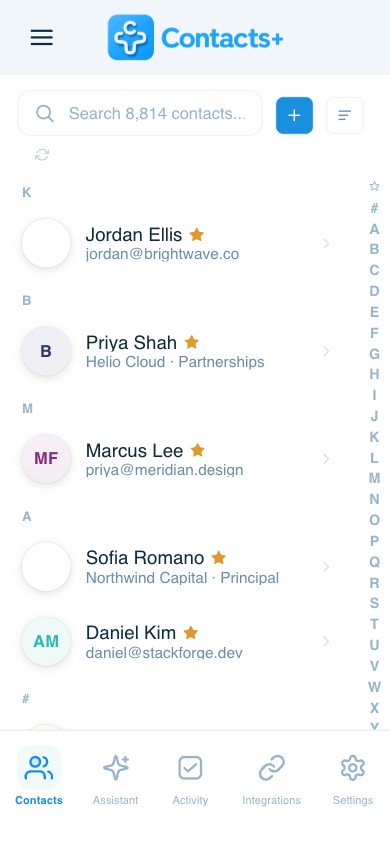
One of the primary functions of contact management is centralizing contact information. In a collaborative work environment, having a single source of truth for all contact details is essential. A contact management system allows administrators to store and organize contact information for team members, departments, and external partners in one accessible location.
When colleagues have quick and easy access to up-to-date contact information, they do not need to search through multiple sources or rely on outdated lists. This centralization means everyone can be on the same page and can connect with the right people at the right time, fostering smoother communication and collaboration.
The hard part is that most teams attempt this with an export. Someone builds the master list, sends the spreadsheet round, and it is accurate for roughly a week. After that, every number that changes changes in one person’s copy and nobody else’s, and two people quietly correct the same wrong email address in two different files. Now there is no version anyone trusts and no way to tell which is newer. A shared address book inverts the problem: there is one record, so there is nothing to reconcile, and a correction lands for everybody the moment it is made.
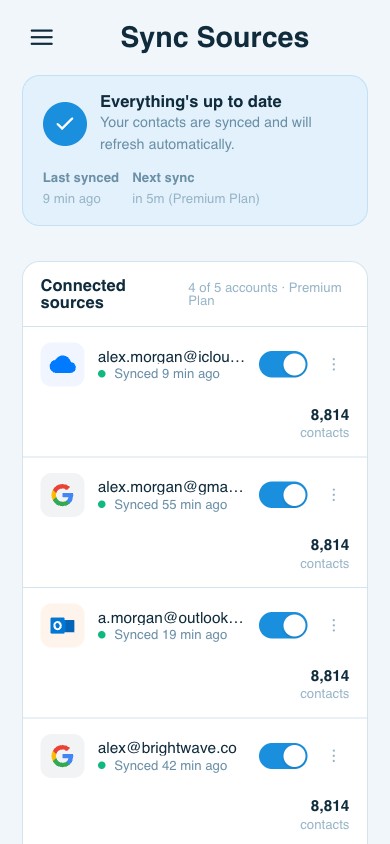
It matters, too, that colleagues are rarely all on the same provider. One person lives in Google, another in Outlook, and the vendor list is sitting in iCloud on somebody’s phone. Any approach that assumes a single provider falls over on contact with a real team, which is why the shared list has to sit above those accounts rather than inside one of them.
2. Facilitate Cross-Departmental Collaboration
Organizations often consist of various departments, each with its own set of contacts and communication needs. However, collaboration across departments is critical for achieving broader organizational goals. Contact management systems can help bridge the gap between departments by providing a shared platform for contact information.
Administrators can use contact management tools to create groupings or categories based on departments, projects, or teams. This segmentation makes it easier for employees to identify and reach out to colleagues in other departments when they need to collaborate. For example, a marketing agency creating a campaign can easily find and connect with the sales team to align their efforts, ensuring a unified approach.
3. Enhance Communication with Automation
Effective communication is a cornerstone of collaboration, and contact management systems can enhance this by automating certain aspects of communication. Administrators can set up automated reminders, notifications, and follow-ups to ensure that important messages are not overlooked and that team members stay informed.
For instance, the contact management system can automatically send reminders to the relevant team members if a project deadline is approaching. Similarly, administrators can schedule regular updates or newsletters to specific groups, keeping everyone in the loop and fostering a culture of transparency.
4. Track Interactions and Maintain a Communication History
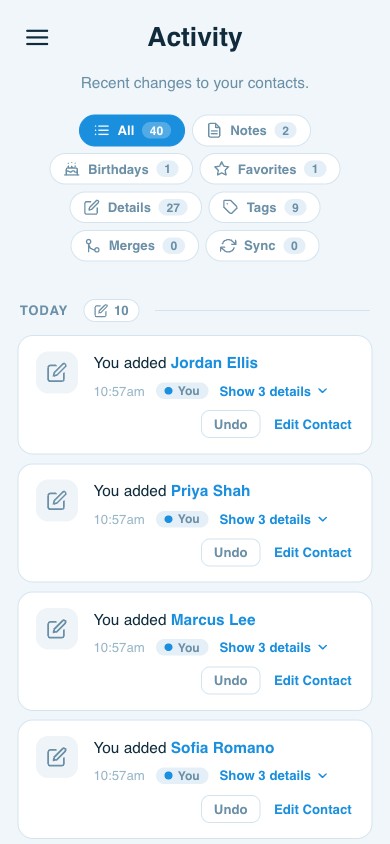
Understanding the history of interactions between team members and departments can provide valuable insights into collaboration patterns and challenges. Contact management systems often include features that allow administrators to track and log interactions, such as emails, meetings, and phone calls.
By maintaining a communication history, administrators can identify potential bottlenecks or areas where communication may break down. This visibility enables them to address issues proactively and implement strategies to improve collaboration. Additionally, having a record of past interactions can help teams pick up where they left off, ensuring continuity in ongoing projects.
5. Foster a Culture of Accountability
Accountability is a crucial factor in successful collaboration. When team members are held accountable for their roles and responsibilities, they are more likely to communicate effectively and contribute to the team’s goals. Contact management systems can support this by providing a clear indication as to who is responsible for what tasks and who needs to be contacted for specific issues.
Administrators can use contact management tools to assign roles and responsibilities, track task progress, and set deadlines. This clarity helps team members understand their obligations and encourages them to stay on track, leading to more productive collaboration.
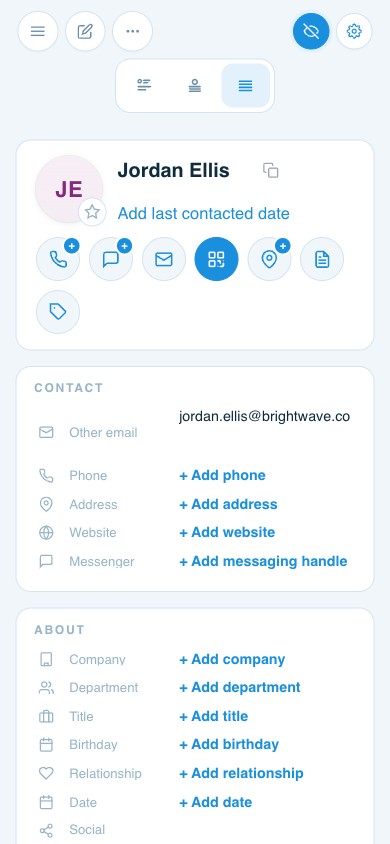
Two mechanics do most of that work. The first is roles. Owner, admin and member permissions decide who can change a shared record and who can only read it, so a team address book does not have to be either locked down or left wide open. The second is naming an owner on each contact, which answers the question that actually causes duplicated effort: who holds this relationship? Add a shared note to the record and the context travels with the person rather than sitting in one colleague’s inbox.
This also covers the case administrators quietly dread. Contacts kept in someone’s personal account leave with them when they resign, and no amount of offboarding recovers what was never written down anywhere shared. A team address book belongs to the organization, not to one login.
6. Support Remote and Hybrid Work Models
With remote and hybrid work models becoming increasingly popular, it’s even more critical for organizations to have practical collaboration tools. Contact management systems are invaluable in this context, as they enable administrators to create effective communication and collaboration, no matter where team members are physically located.
With a contact management system, remote employees can easily connect with their colleagues, access shared contact information, and stay informed about ongoing projects. This connectivity helps to bridge the physical gap between team members, ensuring that remote work does not hinder collaboration.
7. Leverage Data Analytics for Continuous Improvement
Data-driven decision-making is becoming increasingly important in modern organizations. Contact management systems can provide administrators with valuable data and analytics on communication patterns, collaboration frequency, and team engagement.
By analyzing this data, administrators can gain insights into how teams collaborate and identify areas for improvement. For example, if the data shows that specific departments rarely communicate with each other, administrators can take steps to encourage more cross-departmental collaboration. Continuous improvement based on data insights helps organizations create a more collaborative and efficient work environment.
None of this requires a new platform. It requires deciding that the organization’s own contacts — colleagues, vendors, partners, the people every project depends on — deserve the same single, current, shared record you would insist on for a customer.
Related articles

Auto‑Summaries of Past Interactions (AI‑Powered COE‑Memory)

22 Digital Marketing Tools for the Solo Marketer

CRM vs. CMS: What’s The Difference?
Put your contacts to work
Sync, enrich, and clean your entire address book with ContactsPlus — free to start.
Sign up free ← Back to all articles