
The Pre-Pipeline Playbook: How VCs Track Founders Before They’re Ready to Pitch

Key Takeaways
- The best VC deals come from relationships built long before a founder is fundraising, but most CRMs aren’t designed to support them, so these relationships quietly die.
- Use a dedicated tagging system to classify pre-pipeline founders by actual stage: pre-product, pre-traction, pre-fundraise, and operator-watching. Layer in sector and source tags for searchable, actionable slices.
- Pre-pipeline notes should capture trajectory, not diligence data. After every conversation, record what they’re working on, what’s changed, and what they need help with.
- Match your follow-up cadence to the stage. From every 3–4 months for pre-product founders to every 3–4 weeks for pre-fundraise ones. Set the next reminder before you close the contact.
- Run a quarterly review of all pre-pipeline contacts: move people between stages, identify who’s gone cold, and commit to three outreach touches that week.
- Keep pre-pipeline contacts out of your deal CRM. Maintain them in a separate system (like ContactsPlus) that feeds into your pipeline only when a founder moves into active fundraising.
Most VC contact management advice assumes a founder is already in your pipeline. They’ve sent a deck, you’ve taken a meeting, you’re in some stage of diligence or decision. Your CRM has fields for valuation, round size, lead status, and whether partners have weighed in. The whole apparatus is built for the moment when there’s a deal on the table.
But that’s not where the best deals come from. The best deals come from relationships you started two years ago with a founder who wasn’t fundraising at the time, didn’t have a deck, and might not have even formally started the company yet. By the time that founder does decide to raise, the work is already done. You don’t have to win a competitive process; you’ve been the person they call first because you’ve been the person who showed up first.
The challenge is that almost no contact system is designed for this. You can’t put a pre-fundraising founder in your pipeline because there’s no round to track. You can’t run a normal follow-up cadence because there’s no obvious reason to follow up. So most pre-pipeline relationships die quietly, and the deal you should have won goes to someone else.
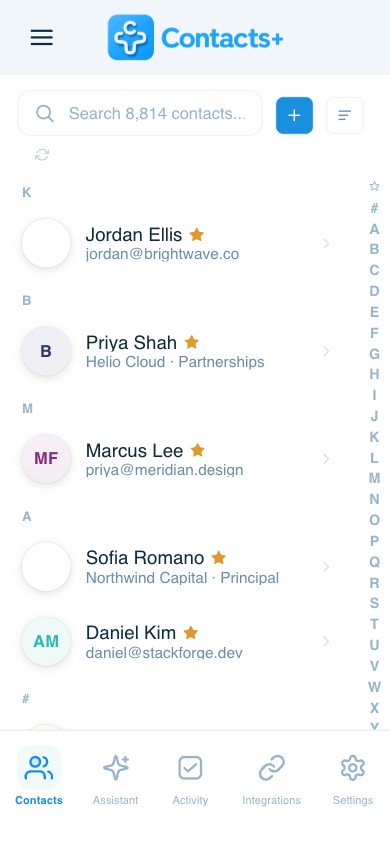
This playbook is about how to fix that. Specifically: how to use ContactsPlus to track founders before they’re ready to pitch, with a tagging system, a notes discipline, and a follow-up cadence built for relationships that don’t have a transaction attached yet.
Why Pre-Pipeline Relationships Die
Pre-pipeline relationships die for predictable reasons. The first is that they’re invisible inside your CRM. Your CRM was built to track deals, and a founder who isn’t raising isn’t a deal. So they get filed in some “leads” or “prospects” bucket that no one looks at, or they don’t get filed anywhere at all and live only in your inbox.
The second is that there’s no event to trigger your next interaction. With an active deal, your next step is obvious: schedule the next meeting, send the term sheet, do the diligence call. With a pre-pipeline relationship, the next step is whatever you decide it is, which usually means nothing.
The third is that they’re easy to forget. You meet thirty founders at an event. Two of them are interesting. You mean to follow up. A week later you’re prepping for a partner meeting and the moment is gone. A year later that founder closes a seed round, and you read about it on X.
The fix to all three is structural. You need a system that surfaces pre-pipeline founders, prompts you to take action on them, and makes that action easy enough that you’ll actually do it.
The Tagging Layer
Start with tags. Pre-pipeline founders need their own classification because they don’t fit in your normal pipeline stages. Use a small set of tags that captures what stage they’re really at.
- “Pre-product” for founders still figuring out what they’re going to build. These conversations are speculative, and the relationship is mostly about being useful, connecting them with people, sharing relevant reading, just being a sounding board.
- “Pre-traction” for founders who have a product but aren’t yet at the metrics that would make a round easy. These conversations focus on what they’re learning, what’s working, what’s not, and how their thinking is evolving. The follow-up cadence is more frequent because things are moving.
- “Pre-fundraise” for founders who are likely to raise in the next 6–12 months but aren’t actively in a process yet. This is the hottest pre-pipeline category and deserves the most active engagement.
- “Operator-watching” for people who aren’t founders yet but you suspect will be, like strong PMs, technical leads, second-time-around people thinking about leaving their current company. These are the longest-cycle relationships and often the most valuable.
Combine these stage tags with sector tags (fintech, devtools, vertical-saas, climate, etc.) and source tags (intro-from-X, met-at-conference, cold-inbound, partner-led). The combination lets you answer questions like “show me all pre-fundraise devtools founders I met through warm intros,” which is exactly the slice you’d want to scan before a sector deep dive or when a portfolio company needs to hire.
The Notes Discipline
Notes on pre-pipeline founders work differently than notes on active deals. Active-deal notes capture decision-relevant facts: ARR, growth rate, churn, burn. Pre-pipeline notes capture trajectory.
After every conversation with a pre-pipeline founder, write down three things. What are they working on right now? What’s changed since the last time we talked? What do they need that I might be able to help with?
The third question is the one that compounds. If you can introduce them to a designer, send them a relevant article, connect them with a portfolio company that has the same challenge, or just remember to ask them about something they mentioned six months ago, you become a person worth talking to. The notes are how you remember what to do.
Keep these notes short. Three to five sentences after each interaction is plenty. The point is not to build a dossier; it’s to give future-you enough context to be useful in the next conversation.
The Follow-Up Cadence
Pre-pipeline relationships need a cadence but not the same cadence as active deals. The right rhythm depends on the stage tag.
- Pre-product founders: every three to four months. They’re moving slowly, and over-frequent check-ins are intrusive. A quick “saw this and thought of you” message with a relevant link or article is usually the right touch.
- Pre-traction founders: every six to eight weeks. Things are happening, and you want to know what’s changing. A short check-in question like, “how did the launch go?” gets a richer response than a generic “how’s it going?”
- Pre-fundraise founders: every three to four weeks. You’re now competing for attention against other VCs who have figured out this founder is interesting. Frequency matters, but so does substance. Make sure each touch is actually useful. An intro, a piece of research, a question that helps them think, not just a “checking in” email.
- Operator-watching: every two to three months. Slow burn, mostly being interested in what they’re working on now. The signal you’re listening for is when they start talking about leaving.
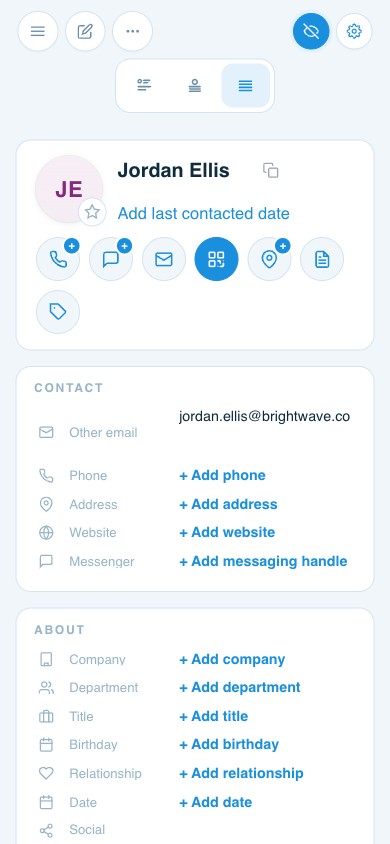
The way to make this cadence work is to set follow-up reminders directly on contact records. When you finish a meeting, set the next reminder before you close the contact. Don’t trust yourself to remember.
The Quarterly Pre-Pipeline Review
Once a quarter, run a review of every pre-pipeline contact. Filter by your pre-pipeline tags and scroll through the list. Three questions per contact:
Have they moved stages? A pre-product founder with traction needs to be moved to the pre-traction stage. A pre-fundraise founder who’s now actually raising needs to be moved into your active pipeline.
Have they gone cold? If you haven’t talked to a pre-traction founder in four months and they haven’t responded to your last two messages, accept that the relationship has cooled and either re-energize it or let it sit.
Are there contacts I should be talking to who I’m not? The review is also a forcing function for outreach. Identify three people from your list to reach out to this week.
This quarterly process is what separates VCs who actually maintain pre-pipeline coverage from VCs who think they do.
Pre-pipeline relationships are where the best VC deals come from, but they die without structure because they don’t fit into a standard CRM pipeline. The fix is a tagging system that classifies founders by their actual stage (pre-product, pre-traction, pre-fundraise, operator-watching), a notes discipline focused on trajectory and helpfulness rather than diligence facts, and a follow-up cadence calibrated to each stage. Run a quarterly review to move contacts between stages, identify who’s gone cold, and prompt outbound touches. With ContactsPlus, all of this can run as a single coherent system, outside your deal-tracking CRM but feeding it directly when founders move into active fundraising.
Frequently Asked Questions
Why not just use my CRM for pre-pipeline founders?
Most VC CRMs are built around deal stages and require a transaction to make sense. Pre-pipeline founders distort your pipeline metrics and clutter the views your team uses for active deals. Keeping them in a separate contact system that flows into the CRM when a deal materializes works better.
How many pre-pipeline founders should I be tracking?
Depends on your fund stage and check size. A seed investor might actively track 200–400 pre-pipeline relationships. A multi-stage fund might track far more across multiple investors. The right number is the largest you can maintain at the cadence above without it feeling fake.
What’s the right way to ask a founder if they’re going to raise?
Don’t. The whole point of pre-pipeline tracking is to be useful before the question is on the table. When they’re ready to raise, they’ll bring it up. Asking too early signals that you’re more interested in the deal than the person.
How do I know when to move someone from pre-fundraise to active pipeline?
When they tell you they’re starting to take meetings, or when you have direct signal (intros being made, deck circulating, partner mentions). Move them as soon as the signal is real. Don’t wait for the formal pitch.
What if a founder ghosts me after a few exchanges?
Don’t take it personally and don’t escalate. People are busy. Tag them as cold, leave a clean note about where things left off, and check back in six months with something genuinely useful. If they’re still uninterested after that, let it go.
Related articles

7 Tips for Being an Instagram Networking Pro

How to Get a Profesional Headshot for LinkedIn

Personal Branding: A Comprehensive Guide
Put your contacts to work
Sync, enrich, and clean your entire address book with ContactsPlus — free to start.
Sign up free ← Back to all articles