
Contact management software
Contact management software
that maintains itself
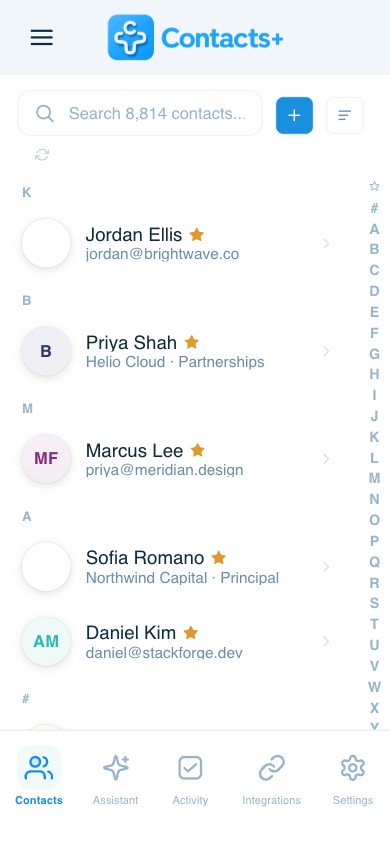
Most people don’t have a contacts problem so much as a copies problem — the same person in a work account, a personal account and a phone, all slightly different, none of them right. ContactsPlus unifies those accounts into one clean list and keeps it that way.
At a glance
ContactsPlus is contact management software that unifies Google, iCloud and Outlook into one address book — deduplicated, enriched, and current in every connected account.
- One list built from the accounts you already use
- Duplicates found and merged across all of them at once
- Missing details filled in automatically
- Shared with a team, with roles, on the Teams plan
The actual problem
Why contact lists rot
Nobody sets out to keep four versions of their address book. It happens because every account you sign into quietly starts its own.
Every account keeps its own list
A work Google account, a personal iCloud account and an Outlook account each hold a partial copy. None of them is complete, and none of them knows about the others.
Duplicates breed quietly
The same person arrives from two accounts and becomes two records. Each gets edited separately until neither is trustworthy.
Records go stale on their own
People change jobs, numbers and addresses. A static list is wrong a little more every month, and nothing tells you which parts.
The context lives elsewhere
How you met, what was agreed, when you last spoke — all of it sits in an inbox rather than on the record, where it would actually be useful.
Spreadsheets make it worse
Exporting to a spreadsheet feels like taking control, but it creates one more copy that is out of date the moment it is saved.
Nothing survives a new device
Every phone upgrade re-exposes the mess, because contacts tied to a handset rather than an account don’t travel. See transferring contacts to a new phone.
What it does instead
One list, kept right for you
Unifies every account
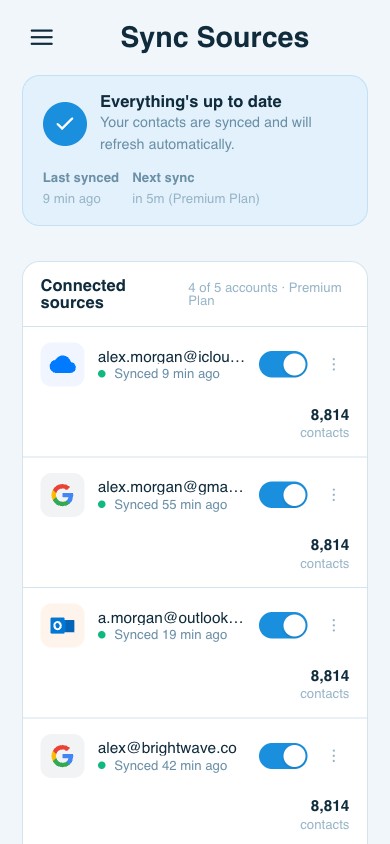
Google, iCloud and Outlook in one address book, with changes flowing back to each. See how contact sync works.
Removes the duplicates
Finds people who exist more than once across accounts and merges them field by field, so you keep the better value. See duplicate cleanup.
Fills in what is missing
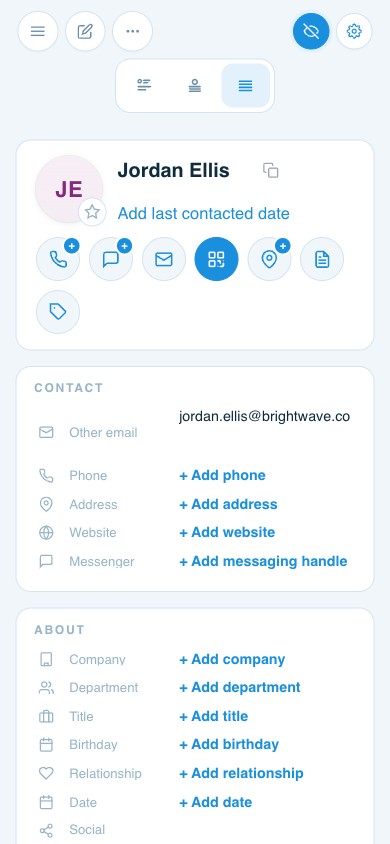
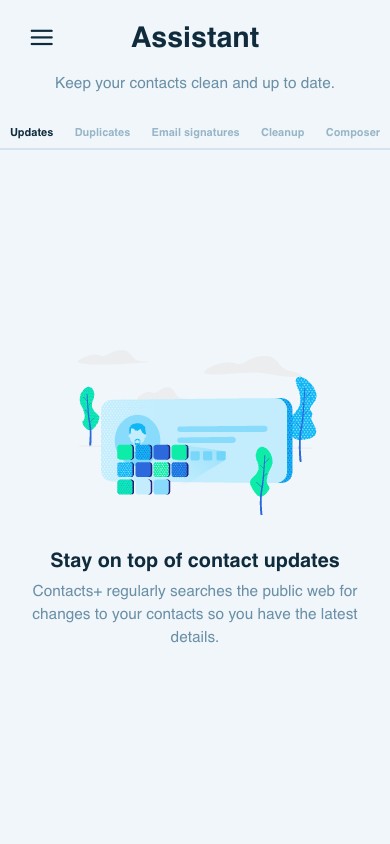
Enrichment adds publicly available detail, so a bare name and number becomes a contact you can actually use. See contact enrichment.
Captures new contacts fast
Scan a business card or screenshot anything with contact details on it, and it becomes a complete record. See the business card scanner.
Works for a whole team
One shared address book with roles and shared notes, so a team stops keeping private copies. See shared contacts.
Never locks you in
Export as CSV or vCard whenever you like. Software that manages your contacts should never be the reason you can’t leave.
Step by step
How to set it up
Connect your accounts
Bring in the Google, iCloud and Outlook accounts your contacts already live in, so you start from everything you have rather than a partial import.
Merge the duplicates
Review the people who exist more than once and merge them field by field, so you end up with one record per person rather than a bulk merge you have to trust blindly.
Fill in the gaps
Enrichment adds publicly available details to thin records, so a name and a number becomes something useful.
Keep it current
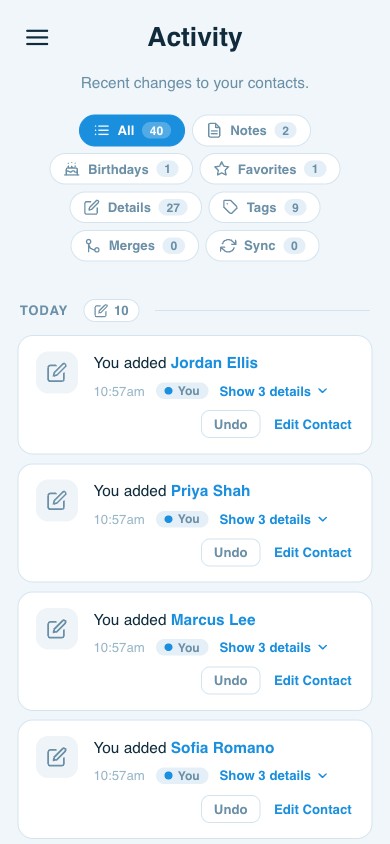
From here it maintains itself — changes flow back to every connected account without anyone tidying by hand.
Narrow it down
Looking for something more specific?
How to choose the best one
What actually separates one contact manager from another, and the questions worth asking before you commit.
Personal CRM
If the goal is staying in touch rather than managing a pipeline, this is the shape that fits.
FAQ
Frequently asked questions
What does contact management software actually do?
It gives you one place to keep everyone you know, instead of a list per device and per email account. Good contact management software unifies those accounts, removes the duplicates that come from having several, fills in missing detail, and keeps every connected account current.
How is this different from a CRM?
A CRM is built around deals and pipeline, and it expects you to feed it. Contact management software is built around the people themselves and maintains itself from the accounts you already use. If your problem is that your contacts are scattered and out of date rather than that you can’t track a sales pipeline, contact management is the closer fit.
Do I have to move away from Google or Outlook?
No. ContactsPlus works with those accounts rather than replacing them. Your contacts stay where they are, and changes flow back, so nothing is trapped in another silo.
Will it fix the duplicates I already have?
Yes. Duplicates are found across every connected account at once, and you review each field before merging, so you keep the better value rather than letting a bulk merge guess.
Can a team share one list?
Yes, on the Teams plan. Everyone works from one shared address book with Owner, Admin and Member roles, and anyone’s edit updates everyone’s view in real time.
Can I get my contacts back out?
At any time. Export as CSV or vCard whenever you want, so your list is never held hostage by the tool managing it.