
The Missing Layer Between CMS and Inbox: AI-Aware Contact Intelligence

Key Takeaways
- There’s a critical gap between CMSs (which store contact data) and inboxes (which send messages). AI-aware contact intelligence fills that gap.
- Static CMS fields like “lead status” or “last contacted date” don’t capture relationship health, momentum, or intent.
- AI-aware contact intelligence tracks behavioral trends over time, not just single actions, to identify engagement patterns humans can’t manually monitor.
- It surfaces three things most tools miss: relationship health signals, contextual insights inferred from behavior, and quiet recommendations that support decisions without adding work.
- Sending fewer, smarter emails to the right contacts consistently outperforms blasting an entire list.
- Intelligence is not the same as automation. It helps you make better decisions rather than executing predefined rules.
- The result: less guesswork, better segmentation, protected deliverability, and email marketing that feels like informed decision-making.
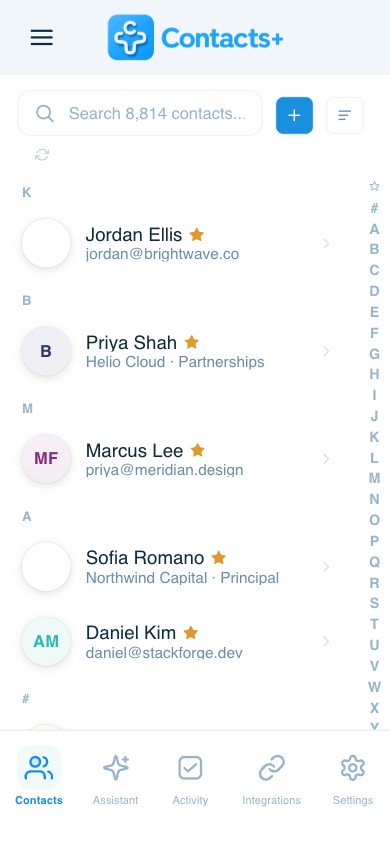
Contact Management Software (CMS) is great at storing data. Inboxes are great at sending messages. But for a lot of busy marketers, there’s a frustrating gap in between.
You know the one.
Your CMS says a contact is “active,” but they haven’t opened an email in months. Your inbox is full of campaigns going out on schedule, but engagement keeps slipping. And somehow, despite all the tools in your stack, you’re still guessing who actually wants to hear from you, and who quietly checked out a long time ago.
That gap between knowing who someone is and knowing how to talk to them right now is where things break down. And it’s exactly where AI-aware contact intelligence fits in.
Not as another system to manage. Not as a replacement for your CMS. But as the missing layer that makes everything else smarter.
Your CMS Track Records. Inboxes Send Messages. Intelligence Does the Thinking.
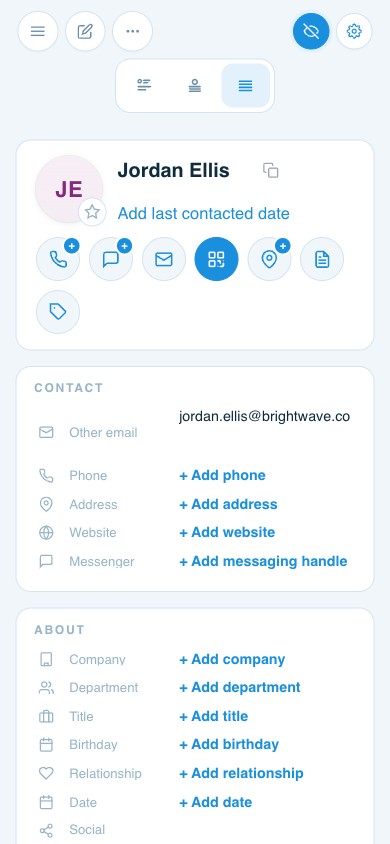
Traditional CMSs were built to answer questions like:
- Who is this person?
- Where do they work?
- When did we last talk?
Those are useful questions. But they’re not the questions busy marketers struggle with day-to-day.
The harder questions sound more like this:
- Is this person still paying attention?
- Has our relationship cooled off or warmed up?
- Are we sending too much, too little, or just the wrong thing?
Most CMSs weren’t designed to answer those questions. They store notes, static fields, and historical activity, but they don’t interpret what’s happening now. And inbox tools? They’re optimized for delivery, not understanding.
That’s where AI-aware contact intelligence comes in. It lives between your CMS and your inbox, translating raw activity into usable context, quietly, continuously, and without adding more work to your plate.
The Problem with Static Contact Data
Let’s be honest: contact data goes stale fast.
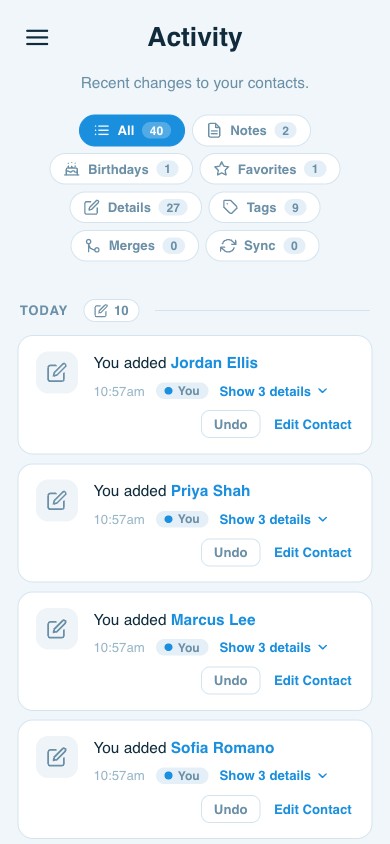
People change jobs. Interests shift. Engagement patterns evolve. Someone who was a great fit six months ago might be completely unresponsive today, and your CMS won’t necessarily flag that.
Static fields like “lead status” or “last contacted date” don’t capture relationship health. They don’t reflect momentum, intent, or fatigue. And without that context, marketers end up doing one of two things:
- Over-emailing contacts who have gone cold
- Under-serving contacts who are actually ready to engage
Neither is great for performance. And both can quietly hurt deliverability, trust, and results.
AI-aware contact intelligence looks at behavior over time, not just single actions, and spots patterns humans don’t have time to track manually.
What AI-Aware Contact Intelligence Actually Does
This isn’t about flashy dashboards or complicated scoring models. The real value is subtle and practical.
AI-aware contact intelligence focuses on three things most tools miss:
1. Relationship Health, Not Just Activity
Instead of asking, “Did this contact open the last email?” AI looks at trends:
- Are opens declining over time?
- Is engagement sporadic or consistent?
- Did a once-active contact suddenly drop off?
These signals help identify weakening relationships early, before they turn into disengaged contacts that drag down performance.
2. Context You Didn’t Have to Manually Add
No one has time to constantly update notes or tags for every contact. AI fills in those gaps by inferring context from behavior:
- Which topics seem to resonate
- Whether a contact prefers occasional updates or frequent communication
- How recent engagement compares to their historical baseline
That context makes segmentation smarter without requiring more setup.
3. Quiet Recommendations, Not Extra Work
The best intelligence doesn’t demand attention; it supports decisions behind the scenes.
AI-aware systems can quietly suggest when a contact might need a break, when a re-engagement makes sense, or when someone is primed for a more targeted message. You stay in control, but you’re no longer flying blind.
Why This Layer Matters More Than Ever
Email marketing has changed. Volume is higher. Attention is lower. And inbox providers are paying close attention to how recipients behave.
That means relationship quality matters more than raw list size.
Sending fewer, smarter emails to the right contacts often outperforms blasting your entire database. But that only works if you know who the right contacts are right now—not who they were when they first signed up.
AI-aware contact intelligence helps marketers adapt in real time without constantly rebuilding lists or overthinking segmentation rules.
For busy teams, that’s huge.
The Difference Between Automation and Intelligence
It’s worth calling this out: intelligence is not the same thing as automation.
Automation executes predefined rules. Intelligence helps you make better decisions.
AI-aware contact intelligence doesn’t override your strategy or force actions. It gives you clearer insight into your audience so you can choose what to send, who to send it to, and when it actually makes sense.
That distinction matters, especially for marketers who want support, not surprises.
What This Means for Everyday Marketers
In practical terms, this missing layer helps you:
- Stop treating all contacts the same
- Protect engagement by identifying fatigue early
- Focus effort on relationships that are actually active
- Keep your list usable, not just bigger
And maybe most importantly: it reduces guesswork.
Instead of wondering why engagement dipped or why a campaign underperformed, you have clearer signals about audience readiness and relationship health.
That makes email marketing feel less like trial and error, and more like informed decision-making.
Smarter Contacts Make Everything Else Work Better
Your CMS isn’t broken. Your inbox isn’t broken. They’re just incomplete without intelligence connecting them.
AI-aware contact intelligence fills that gap by turning passive data into active understanding, without adding complexity or busywork.
For marketers juggling deadlines, campaigns, and ever-growing lists, that missing layer can be the difference between sending more emails and sending better ones.
And when your contacts make more sense, email marketing gets a whole lot easier.
Frequently Asked Questions
What is AI-aware contact intelligence?
It’s a layer of insight that sits between your CMS and your email inbox, translating raw contact activity into usable context. Rather than just storing data or sending messages, it interprets behavioral trends to help you understand relationship health and audience readiness in real time.
How is this different from a CMS?
CMSs answer questions such as “who is this person?” and “When did we last contact them?” AI-aware contact intelligence answers harder questions: Is this person still paying attention? Has our relationship warmed up or cooled off? Are we sending too much or too little? It’s not a replacement for your CMS; it makes your CMS smarter.
How is it different from marketing automation?
Automation executes predefined rules. Intelligence helps you make better decisions. AI-aware contact intelligence doesn’t override your strategy; it gives you clearer signals about your audience so you stay in control of what to send and when.
What signals does it actually look at?
It looks at behavioral trends over time: whether open rates are declining, whether engagement is sporadic or consistent, which topics resonate with a contact, how frequently they prefer to hear from you, and how their recent activity compares to their historical baseline.
Why does this matter for deliverability?
Inbox providers pay close attention to how recipients behave. Sending to disengaged contacts hurts your sender reputation. By identifying relationship fatigue early, AI-aware contact intelligence helps you protect engagement and keep your list healthy, not just big.
Do I need to set up complicated rules or scoring models?
No. The value lies in the subtlety; it automatically infers context from behavior, so you’re not manually tagging contacts or building complex logic. It works in the background and surfaces recommendations when they’re relevant.
Who benefits most from this?
Busy marketers managing growing lists who don’t have time to constantly audit segments or update contact records. If you’ve ever wondered why engagement dipped or why a campaign underperformed despite hitting your whole list, this layer gives you clearer answers.
Related articles
3 Contact Management Resources Featuring FullContact

AI‑Driven Contact Segmentation for Hyper‑Targeted Campaigns

What To Do Before Hitting Send On Your Emails
Put your contacts to work
Sync, enrich, and clean your entire address book with ContactsPlus — free to start.
Sign up free ← Back to all articles