
Switching from Business Contact Manager
Business Contact Manager is gone. Here’s where your contacts go now.
Microsoft dropped Business Contact Manager after Outlook 2013, and retired its successor, Outlook Customer Manager, in June 2020 without replacing it. If you still keep your business contacts in an old copy of Outlook, or in a spreadsheet you exported from it, this is the part that needs a new home.
Works with Outlook and Microsoft 365 — shared team address book on Teams
At a glance
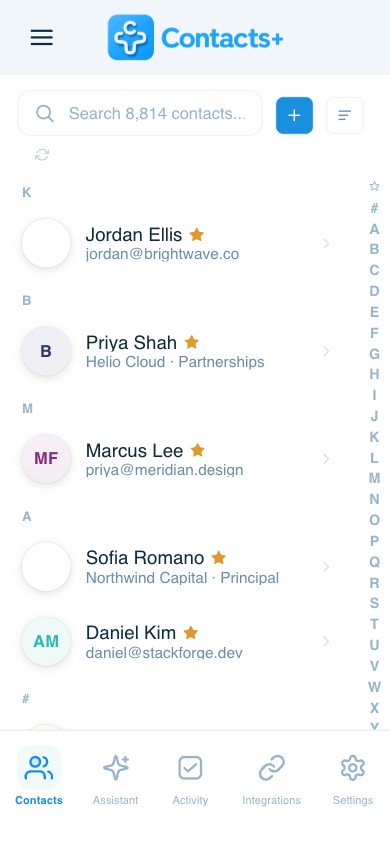
Business Contact Manager alternative: ContactsPlus keeps your business contacts in one list that syncs with Outlook and Microsoft 365, Google and iCloud, and lets a whole team share it.
- Two-way sync with Outlook, Microsoft 365 and Exchange
- One shared address book for up to 50 people (Teams)
- Notes, tags, files and follow-up reminders on every contact
- Imports the CSV or Excel file you export from Business Contact Manager
Moving over
Get your business contacts out first
Business Contact Manager kept its records separately from your ordinary Outlook contacts, so they don’t move with an Outlook upgrade. Export them while the old installation still opens.
1. Export from Outlook
On the computer that still runs Business Contact Manager, export your business contacts as a CSV or Excel file.
2. Import the file
ContactsPlus imports CSV, Excel and vCard files on every plan, free included. See how to import contacts from a CSV or Excel file.
3. Merge what the import doubled
Most of those people are already in your Outlook contacts, so an import creates duplicates. Merge them in one pass.
What you get
A business contact manager that works with today’s Outlook
Business Contact Manager lived inside one copy of Outlook on one computer. ContactsPlus lives in your accounts, so the same list is on your desktop, your phone and your team’s devices.
Syncs with Outlook and Microsoft 365
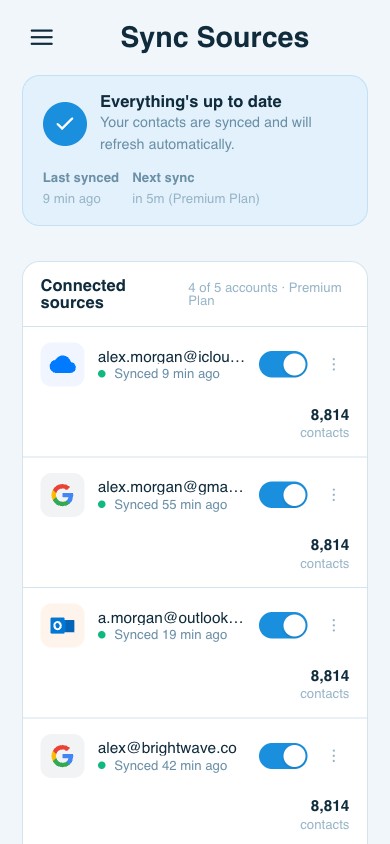
Connect Microsoft 365, Outlook or Exchange alongside Google and iCloud. Sync is two-way, so an edit in either place shows up in both. See Outlook contacts sync.
One list for the whole team Teams
A shared address book for up to 50 people, with Owner, Admin and Member roles. When someone leaves, their clients stay in the team’s list. See shared contacts.
History kept with the person
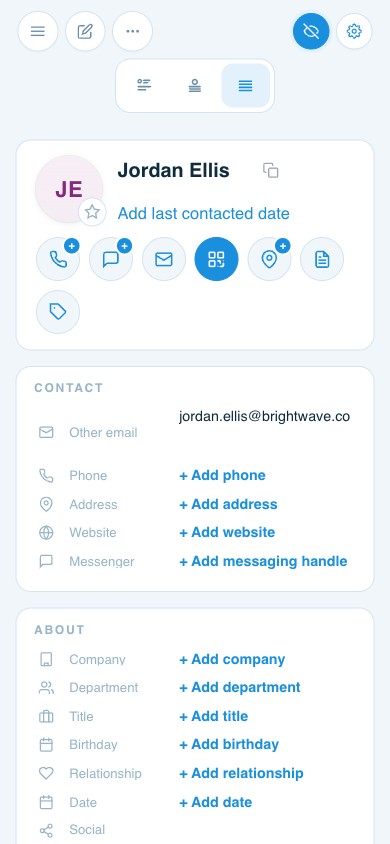
Dated notes, tags and a named contact owner on every record, so the context behind a client relationship doesn’t live in one person’s head.
Follow-ups on the contact
Set a task with a due date on anyone, snooze it, get a daily digest, and push it one-way to your Outlook, Google or Apple calendar. See follow-up reminders.
Files where they belong
Keep contracts, proposals and scans on the contact record instead of in a folder somewhere else. See attaching files to contacts.
Duplicates merged, not piled up Premium
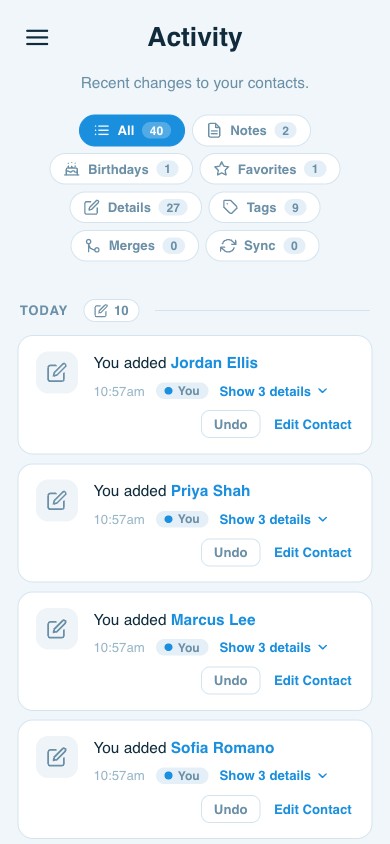
Finds the same person across Outlook, Google and iCloud and merges them field by field. Every change can be undone from your activity history.
Worth knowing before you switch
What Business Contact Manager did that we don’t
Business Contact Manager was a small CRM inside Outlook. Alongside contacts and accounts, it tracked sales opportunities, projects and reports.
ContactsPlus is a contact manager, not a full sales CRM. It doesn’t replace opportunity tracking, project records or sales reports. If those were the main reason you used Business Contact Manager, a dedicated CRM is the closer fit, and you can keep ContactsPlus underneath it to keep the contact data clean.
If what you mostly used it for was a reliable business address book shared across a small team, with notes and history on each client, that is what ContactsPlus is built for, and it works with every current version of Outlook.
Questions
Frequently asked questions
Is Business Contact Manager still available for Outlook?
No. Microsoft discontinued Business Contact Manager after Outlook 2013. Outlook 2016 and every later version, including Microsoft 365, do not support it, and it is no longer available to download. Its successor, Outlook Customer Manager, was retired on 30 June 2020 and was not replaced.
Can I move my Business Contact Manager contacts into ContactsPlus?
Yes. Export your business contacts from the Outlook installation that still runs Business Contact Manager as a CSV or Excel file, then import that file into ContactsPlus. Imports are available on every plan, including the free one. Many of those people will already be in your Outlook contacts, so run duplicate detection straight after the import.
Does ContactsPlus work with Outlook and Microsoft 365?
Yes. ContactsPlus connects to Microsoft 365, Outlook and Exchange accounts, as well as Google and iCloud, and keeps them in two-way sync. A contact you update in ContactsPlus is updated in Outlook, and the other way round.
Can my whole team share one contact list?
Yes. The Teams plan gives up to 50 people one shared address book with Owner, Admin and Member roles, shared notes and a named contact owner. It costs $12.99 per user a month billed annually, or $17.99 monthly, with unlimited contacts.
Is there a free plan?
Yes. The free plan connects one account and holds up to 1,000 contacts, with follow-up reminders, notes, tags and file import included. Premium adds up to five synced accounts, real-time sync, duplicate detection and merge, and contact enrichment. Teams adds the shared address book. See pricing for the full comparison.
Your business contacts, out of one old computer.
Import the export, merge the duplicates, and share one current list with your team.