
Contact list
Building a contact list is easy
keeping one is the hard part
Anyone can accumulate a few thousand names. The difficult bit is a list you still trust two years later — one record per person, tagged so you can find groups again, current without anyone maintaining it by hand. This page is about that second problem.
At a glance
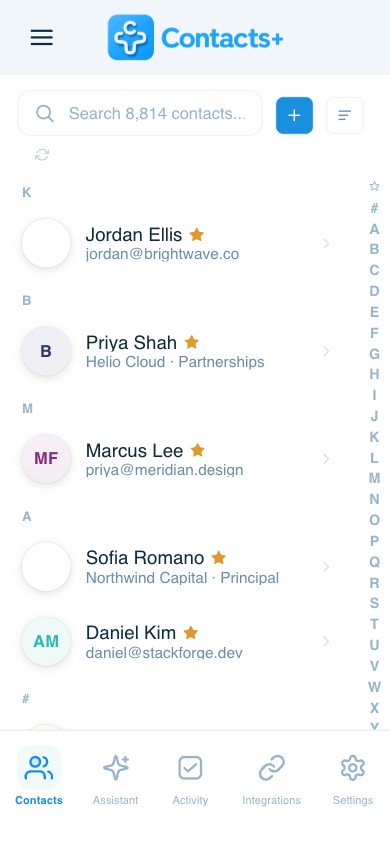
A contact list is only useful if it is one list, one record per person, and organized the way you search. ContactsPlus builds that out of the accounts you already have and keeps it that way.
- Every source pulled into a single list, including spreadsheets
- Duplicates merged across all connected accounts at once
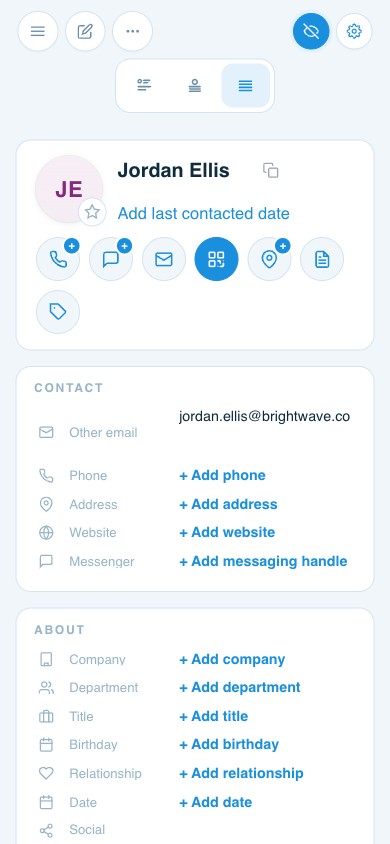
- Tags, notes, reminders and files to make groups findable
- Shareable with a team, exportable as CSV or vCard
What actually goes wrong
Why a contact list stops being worth using
Nobody abandons a contact list deliberately. It stops being useful in small increments until one day you look someone up somewhere else instead.
It was never one list
A work account, a personal account, a phone and two exports. Each holds part of the answer, and no single one of them can be trusted to be complete.
The same people are on it repeatedly
Once a list contains three versions of someone, every edit has a two-in-three chance of landing on the copy nobody reads.
You can’t get a group back out
The list can find one person by name, but not everyone from a particular event, city or project. Without that, it is a phone book rather than a contact list.
Half the records are almost empty
A name and one number. Enough to place someone if you already remember them, useless if you don’t.
The reason you know them is missing
How you met, what was agreed, what to do next. That context is the actual value of a contact list and it is the part almost nobody records.
Everyone keeps a private copy
On a team, the moment two people maintain their own version the two versions start drifting apart, and neither is right by the end of the quarter.
The working parts
What keeps a list organized
Structure is what turns a pile of names into something you can ask questions of.
Tags that match how you search
Where you met someone, what they do for you, which project they are part of. A tag earns its place when it reliably produces a group you actually want to see.
Notes on the record, not in an inbox
What was agreed, who introduced you, what they care about. Written on the contact, it is still there in three years when you need it.
A reason to come back
Set a follow-up reminder with a due date, so the list tells you who to speak to rather than waiting to be searched.
One record per person
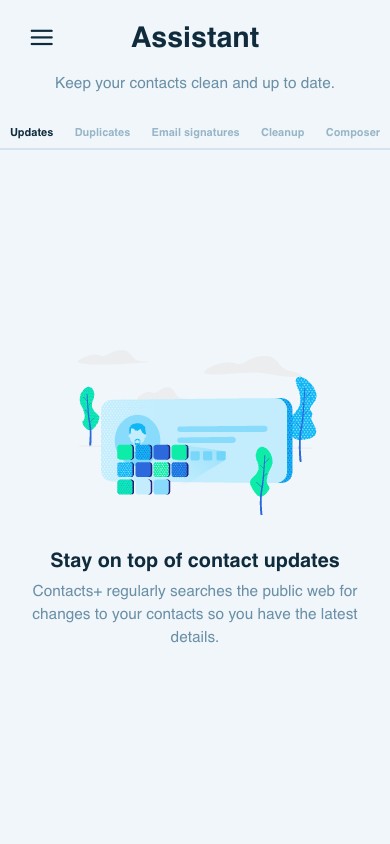
Duplicate detection across every connected account at once, merged field by field. See removing duplicate contacts.
Gaps filled without typing
Enrichment adds publicly available detail to thin records, and the business card scanner turns a card or a screenshot into a full one.
Portable, always
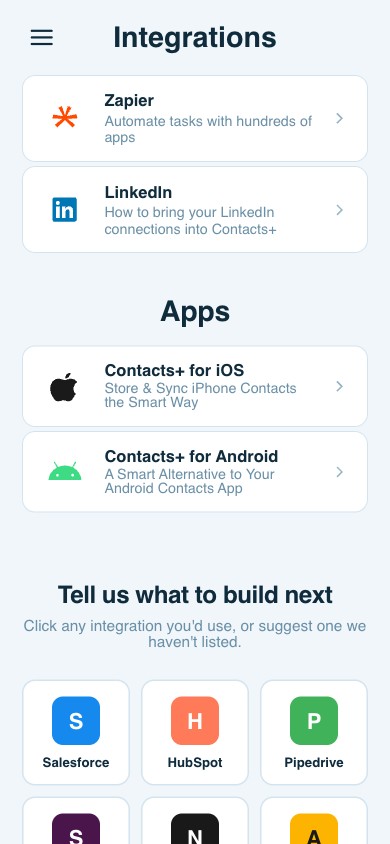
CSV and vCard export whenever you want, plus Zapier to push contacts onward. A list you can’t take with you isn’t really yours.
Step by step
How to build a contact list that stays clean
Pull every source into one list
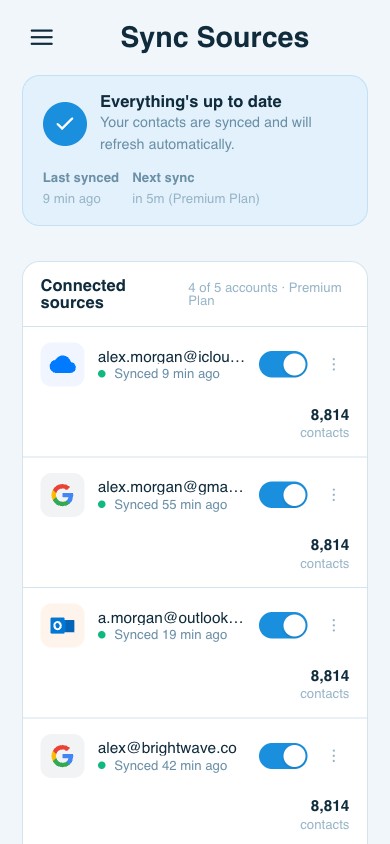
Connect the Google, iCloud and Outlook accounts your contacts are scattered across, and import the spreadsheets and vCard files sitting outside them, so you start from everything you have.
Merge the duplicates before you organize anything
Anyone who arrived from more than one source is on the list twice. Merge first — tagging a list with three versions of the same person means doing the work three times.
Tag people the way you actually think about them
A handful of tags applied consistently beats an elaborate taxonomy you abandon after a fortnight. Tag by how you search, not by what is already a field.
Write down what only you know
Notes, an attached file, a follow-up reminder if there is a reason to speak again. No import and no enrichment can reconstruct this part for you.
Give the list a reason to stay current
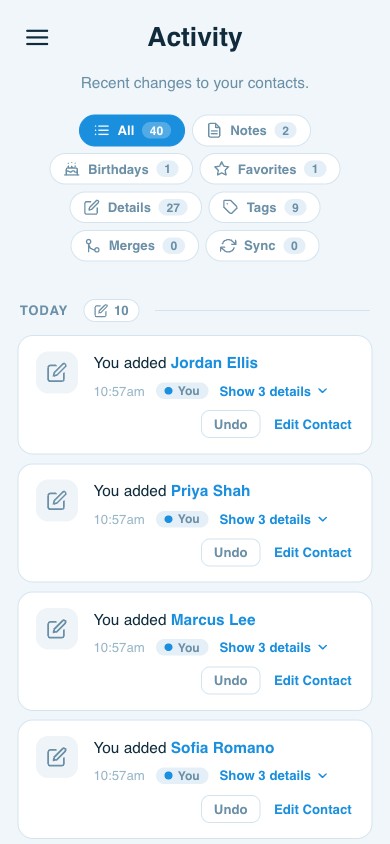
Keep the accounts connected so changes flow back, let enrichment fill the gaps, and clear new duplicate suggestions as they appear rather than planning a cleanup you never do.
More than one person
When the list belongs to a team
A shared contact list isn’t a spreadsheet everyone has a copy of. On ContactsPlus Teams it is one shared address book with Owner, Admin and Member roles, up to 10 accounts and unlimited contacts, where anyone’s edit updates everyone’s view in real time. Clean the duplicates before you invite people, though — a shared list inherits whatever mess was already in it.
Nearby questions
Asking something slightly different?
What a contacts app should do
If you are choosing the software rather than organizing the list — what to expect on iOS, Android and the web.
Where your phone contacts are stored
Device, SIM, Google, iCloud or Outlook, and why that decides whether a contact syncs or quietly disappears.
Using it as a personal CRM
If the point of the list is staying in touch rather than storing numbers, this is the shape that fits.
FAQ
Frequently asked questions
What is a contact list?
A contact list is the set of people you keep details for, wherever those details happen to sit. Most people have several without meaning to: one per email account, one on the phone, and a few spreadsheets. Turning that into a contact list rather than a pile of lists means bringing the sources together and keeping one record per person.
How should I organize a contact list?
Tag by how you will search rather than by what is true. Where you met someone, what they do for you and which project they belong to are all useful because you will one day want the list of everyone matching them. Job titles and company names are already fields, so tagging them again just adds work.
How many tags is too many?
You have too many when you hesitate about which one to apply. A tag is only worth having if it reliably produces a group you want to see. Start with a small set, apply them consistently, and add another only when you catch yourself searching for something the existing ones can’t express.
How do I get rid of the duplicates in my contact list?
Merge across every account at once rather than one account at a time, since most duplicates exist because the same person arrived from two different sources. ContactsPlus finds them across all connected accounts and merges field by field, so you keep the better value instead of trusting a bulk merge.
Can a contact list be shared with other people?
Yes, on the Teams plan, and it is a genuinely different thing from sending a spreadsheet. Everyone works from one shared address book with Owner, Admin and Member roles, and an edit by anyone updates everyone’s view in real time rather than creating another copy to reconcile.
How do I get my contact list back out again?
Export as CSV or vCard at any time, and use Zapier to push contacts into other tools as they change. A list you can’t take with you isn’t really yours.
One list you can still trust in two years.
Bring every source together, merge the duplicates, and let it keep itself current.
Start free